
What is Neuropathy?

When the nerves connecting the spinal cord to the rest of your body become damaged or disrupted from carrying signals, it can result in a group of symptoms called peripheral neuropathy (or just neuropathy). It’s not an uncommon condition, with an estimated 2-3% of the population affected.

The nervous system brings information to and from your brain. When the nerves are affected by an injury, infection, autoimmune condition or something that blocks or puts pressure on them, they can’t properly conduct sensory information.

Some symptoms of neuropathy include:

  • Numbness, especially in the hands or feet
  • Tingling or prickling sensation
  • Sharp or jabbing pain, as if from a knife
  • Burning feeling, similar to sunburn without the heat
  • Freezing sensation
  • Ultra-sensitive to touch
  • Lack of balance or coordination

Diabetes is a major cause of neuropathy, especially in the feet. Increasing circulation through exercise can help relieve or prevent symptoms. Decreased or lack of feeling in the feet and toes can lead to life-threatening infections or amputation. For those diagnosed with diabetes, the importance of monitoring foot health cannot be overstated enough.

When peripheral neuropathy causes muscle weakness or instability, physical therapy can help strengthen these muscles or the surrounding area, to ease pain and increase mobility. Your doctor can monitor your progress and make recommendations for alterations in a physical therapy plan that best addresses your needs.

Making lifestyle changes, including diet and exercise, may address the underlying cause of neuropathy to relieve or eliminate symptoms. The nervous system in your body is both intricate and complex, and may be affected by multiple influences, both environmental and genetic. Developing a treatment plan with your doctor is the first step to recovery.

The orthopedic physicians at Tucson Orthopaedic Institute are experienced in the diagnosis and treatment of conditions affecting the nerves, including neuropathy. They work together with our physical therapists to ensure each patient has the best possible treatment outcome.  If you have nerve pain or other symptoms of peripheral neuropathy, contact one of our convenient locations in the Tucson, Arizona area for an appointment today, or request an appointment online.
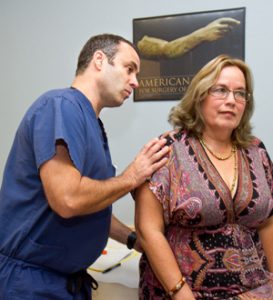
Introduction to Spine Care

The care of patients with spinal disorders has become increasingly complex. As a result, more health care providers have become involved in caring for these patients. The spectrum of providers is wide and includes operative, nonoperative, and pain management specialists. This complexity has lead to increasing frustration and confusion for patients. The objective of this article is to introduce the individuals involved in treating spinal conditions and their role in the treatment of these conditions.

TOI-shots of doctors with patients

The first health care provider most patients will encounter for a back or neck problem is their primary care physician. It is his/her role to provide an initial examination and base his/her treatment on these findings. Typically, anti-inflammatory, pain and muscle relaxant medications will be recommended. Activity modifications (avoid excessive lifting, bending, twisting and turning) may also be recommended.

Physical therapists play an early, integral role in the treatment of patients with spinal conditions. They follow spine-based rehabilitation protocols depending on the patient’s diagnosis. A patient’s response to conservative treatment will often influence whether they will be referred to a specialist. Fortunately, most spinal conditions will resolve after approximately six weeks of conservative care.

During the treatment of spinal conditions, some patients will be referred for cortisone injections (epidural injections, nerve blocks, facet blocks) in order to alleviate their pain. Several different types of physicians perform these injections including anesthesiologists, physiatrists, and some surgeons.

Injections are an integral part of the treatment of this subset of patients. The injections provide diagnostic information (localizing the pain source) and will hopefully provide therapeutic (long-term) relief. The injections are not intended to remove arthritis from the spine or spinal canal or cause disk herniations to resorb. The objective of the cortisone injection is to reduce inflammation in the affected area resulting in pain relief.

For those patients who do not respond to nonoperative treatment, surgery may be recommended. One common question patients have is, “Who should perform my spine surgery: an orthopaedic surgeon or a neurosurgeon?” Patients should seek out those surgeons whose predominate field of expertise is spinal surgery. This person typically has advanced training in and dedicates the vast majority of their elective operative cases to the practice of spinal surgery.

There are certain clinical circumstances (deformity, spinal cord tumors) that are treated exclusively by either an orthopaedic surgeon or a neurosurgeon; however, these represent a small percentage of cases. A spine surgeon will be able to treat conditions of the cervical, thoracic, and lumbar spine and will be well versed with complex spinal instrumentation.

Written by Steven Zeiller, MD

Is Your Child’s Backpack Weighing Them Down?

TUCSON – For parents, school always brings up health concerns: how to keep your kids away from germs, how to keep them eating healthy, and how to make sure they get enough sleep.

Something parents may not think about is how to keep their children’s backs safe from harm.

Dr. Brian Nielsen, a local pediatric orthopedist, says your kid’s backpack should not weigh more than 15 percent over the weight of your child. He says too much weight on their shoulders can leave them with irreversible back damage.

“If you have a heavy backpack and you’re leaning back, you can develop a little stress fracture at the lower back and those don’t usually heal,” he said.

New sixth grader Mackenzie Sanders is already feeling the pain.

“It hurts around the shoulders and sometimes I’m kind of hunching over because of the weight,” she said. Her concerned mom does not have any answers.

“I really have no choice. She’s got to have all of her books and supplies,” she said.

However, doctors say there are some things parents can do to help.

Make sure your kids backpacks have wide, padded straps and that they carry it on both shoulders. Fitness level is also a factor that can make a difference.

“The more fit the child is, the better the posture is, the more flexible they are, the less they’re going to have problems,” Dr. Nielsen said.

Another thing to keep in mind is your family history. If your family members have back issues, your child may be more prone to having them as well. See a specialist if their pain persists for more than a couple of weeks or spreads to other parts of their body.

As appeared on KVOA Channel 4 News on November 10, 2010

Related Document: Is Your Backback Safe? 3 Steps to Safe Backback Use

Search

+