Helpful Tips for Post-Operative Elbow, Hand and Shoulder Surgery
You have just had hand surgery, elbow surgery, or shoulder surgery. These are some helpful hints and frequently asked questions that may help with your recovery and manage your pain.* By staying ahead of your pain and swelling, you do not have to catch up. Remember, an ounce of prevention is worth a pound of cure!
Pain Management
- Begin taking prescription pain medication given to you the same day of your surgery, BEFORE you go to bed. If you have received a nerve block, there is a good chance you will still be comfortable before you go to bed. However, the block will eventually wear off. Take your pain medication before the block wears off/before you go to bed.
- The pain can be more manageable if you stay ahead of your pain, and not chase your pain.
- Itching is a side effect that is quite common to experience after using narcotic pain medication. If you are itching, try over-the-counter Benadryl as directed. This may help to alleviate the itching.
- However, if you are having difficulty breathing, swelling of the lips, face and/or throat, or a new rash, this may indicate a serious allergic reaction. You should stop taking the medication and alert your doctor or seek prompt medication attention.
- As for use of anti-inflammatory medication, such as ibuprofen, Aleve, Motrin, etc., after surgery, this depends on your physician preference. Please check on your discharge instructions or ask your physician before or at the time of your surgery.
Nausea/Constipation
- It is also not uncommon to experience nausea, constipation and sometimes drowsiness with narcotic pain medications.
- Nausea is a common side effect either from the anesthetic or from the pain medication prescription itself. Make sure you take the medication with food to help prevent nausea.
- The medication can also slow down your gastrointestinal tract and lead to constipation. If you experience constipation, try eating foods with high fiber, prune juice, and/or over the counter stool softeners (Check with your local pharmacists about stool softeners, if you have any questions).
- If these are happening, cut back on the amount of pain medication you are taking or stop taking the medication. Contact your physician.
- Do not drive while you are taking pain medications. They may enable your full capacity. Do not drink alcohol, use illicit drugs, drive or make any important decisions while taking pain medication.
Swelling Control
- Swelling is one of the things that contribute to your post-operative pain.
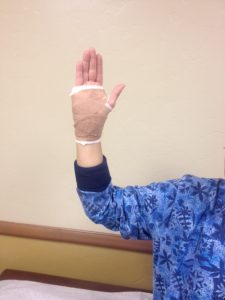
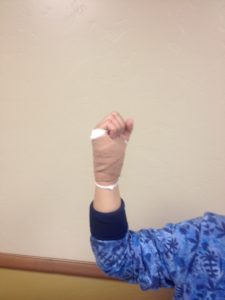
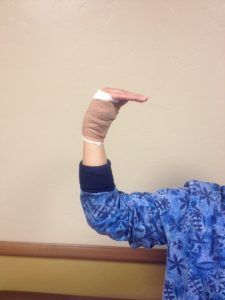
- After your surgery, keep your hand elevated, unless specified not too.
- If you have had shoulder surgery, elevation of your hand may be difficult. In this case, getting a squeeze ball and making a fist repetitively can help to pump the swelling away from your hand.
- Elevate your hand above the level of your heart, especially 3-5 days after surgery.
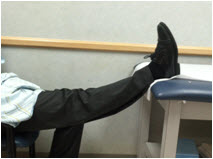
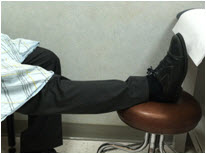
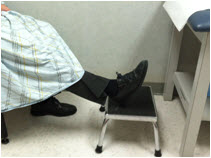
- Below are some photos showing correct ways to elevate your hand.
- Ice is an excellent anti-inflammatory and helps control pain and swelling. Apply ice to the surgical site as tolerable (unless specified otherwise). If the discharge information specifies not to ice, then please do not do so. This may be the case in some situations.
Positions to elevate your hand following surgery:
Exercises/Therapy
- If you have had surgery on your shoulder and/or wrist/hand, it is important to start exercises the day of surgery by making a full fist and straightening your fingers. However, if your surgery was to repair a broken finger, or specified otherwise, follow specific instructions given to you.
- You may be referred to a formal therapist at your follow-up appointment or subsequent appointments. Therapy is determined by your health care provider and individualized for your specific case.
Dressing/Cast and Sling
- Do NOT remove your dressing, unless you are told to do so. This will be removed and/or changed at your first post-operative visit. Keep bandage clean and dry.
- Do NOT get your dressing wet. Protect it with a plastic bag when you shower.
- If your dressing is too tight, you may loosen the ace/bandage, and split the dressing down on one side; however, do NOT remove the entire dressing/splint.
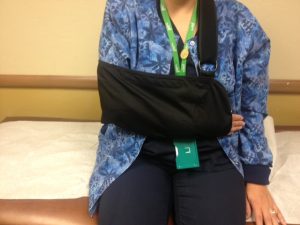
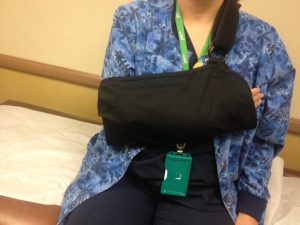
- If you are placed in a sling for a shoulder surgery, keep arm in the sling (as pictured below). Do not actively move the operative shoulder, unless told otherwise. You may gently move your hand, wrist and elbow.
- Seeing blood on or through your bandage occurs and should not be worrisome unless excessive and expanding. You can try to apply some pressure to the area or reinforce the dressing to prevent further bleeding. If excessive and does not stop, call your physician or seek medical attention.
- If you dressing is off, and while your incision is healing, please refrain from applying any antibiotic cream or ointment to the incision area. Keep clean and dry. Regular antimicrobial soap and water while washing is preferred.
Correct placement of arm sling following shoulder surgery:
Long-Term Management and Expectations
- After a traumatic injury and/or elective surgery, it is common to experience swelling for several months. Typically, the process will gradually improve over the next 12 months! Try not to get discouraged, because the swelling will most likely improve with time.
- As time progresses after surgery, the amount of activity will be determined by your physician/health care provider.
*There are many surgeries that are performed on the upper extremity (including surgeries for rotator cuff tear, carpal tunnel syndrome, and trigger finger) with many different post-operative instructions. The information above may not always pertain to you if you were told otherwise on your discharge paperwork and/or by your physician.
Written by Joel R. Goode, MD and Lauren King, PA-C, with contributions by Liz Cakmarstitt, MA