
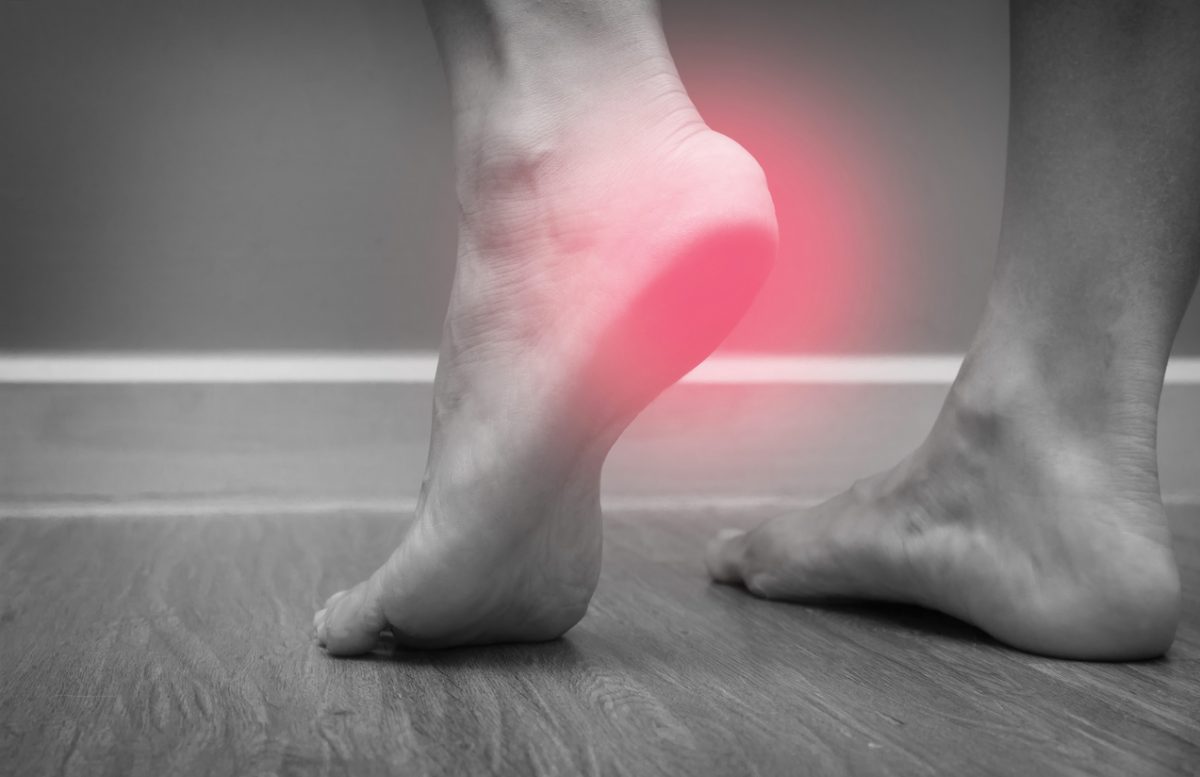
You Could Be Suffering From Plantar Fasciitis

If you are experiencing these types of symptoms, you may be suffering with Plantar Fasciitis.

What is Plantar Fasciitis?

Plantar fasciitis is the most common cause of pain in the heel and bottom of the foot.  It is estimated to affect 1 in 10 people at some point in their lifetime, and most commonly affects people between 40-60 years of age.

Running along the bottom of your foot is a thick band of tissue, a ligament that connects your heel bone to your toes. This is called the plantar fascia. The plantar fascia supports the arch of your foot.

Plantar fasciitis is an inflammation of the plantar fascia. This inflammation is thought to be caused by tiny, microscopic tears that occur in the fibrous tissue by straining that ligament. It is more common in people who are overweight, and those who wear shoes with inadequate support. If you have plantar fasciitis, you may notice that the sole of your foot hurts more as the day goes on, hurting the most when you climb stairs or stand for an extended period.

Even More Risk Factors

Repeated strain on the plantar fascia ligament can cause pain and swelling. This is more likely to happen if:

·        Your feet roll inward too much when you walk (excessive pronation)

·        You have high arches or flat feet

·        You are overweight

·        You wear shoes that don’t fit well, or are worn out

·        You have tight Achilles tendons or calf muscles


Treatment for Plantar Fasciitis

The cost of treating plantar fasciitis in the United States has been estimated at about $284 million each year. And, since plantar fasciitis is caused by stress placed on the foot by the mechanics of walking, no single treatment works best for everyone. Fortunately, about 90% of plantar fasciitis cases will improve within six months with conservative, non-invasive treatment. Some of the more common treatments include:

·        Rest

·        Applying heat

·        Applying ice

·        Calf-strengthening exercises

·        Techniques to stretch calf muscles, Achilles tendons, and plantar fascia

·        Weight reduction in the overweight or obese

·        Nonsteroidal anti-inflammatory drugs (NSAIDS)

·        Custom-fit orthotics/shoe inserts

It is important that you receive a specific diagnosis and subsequent treatment for plantar fasciitis from your doctor, as ignoring this condition may result in chronic heel pain that hinders your regular activities. Implementing your own, unscientific methods of minimizing the pain, like altering the way you walk, might lead to foot, knee, hip or back problems.


If you suspect you may have plantar fasciitis, request an appointment online to visit Tucson Orthopaedic Institute. Come visit the ortho specialists to diagnose your foot pain, at one of our several area locations. You deserve to continue your life with full mobility, and pain free feet will help keep you going!

Ankle Pain: Common Causes

Did you know that your ankle is a synovial hinge joint made up of three bones? It is actually much more complex than you might guess, with a total of 28 bones and 25 joints in the foot and ankle, creating a very stable and powerful platform that allows your ankle to move only slightly from side to side, yet still flex up and down in order to stand, walk, jump and run. Your ankle also has a complex array of connective and soft tissues, nerves, and blood vessels, all combined in one neat little compartment. Because of the massive stress and weight that the ankle regularly carries, it is vulnerable to injury and other conditions. Below are some common causes of ankle pain.

Common Causes of Ankle Pain

Ankle pain can be caused by a variety of conditions or injuries. Some of the most common include:

Achilles tendonitis – This is often caused by overuse. The Achilles tendon is a strong band of connective tissue that attaches the calf muscles to the heel bone of the foot. Achilles tendons can rupture, especially if they are already inflamed and irritated.

Sprained ankle – Sometimes caused by a roll or twisting that stretches or even tears the strong connective tissues that anchor the bones and muscles. If you think of a rubber band being pulled too far, you can imagine what happens when the ligaments are forced beyond their normal stable points. Some sprains are mild, others require surgical intervention or other medical care, such as bracing.

Broken ankle or foot – Bones of the ankle tend to be very strong, however they are not immune to fractures from repeated stress or a sudden (acute) injury. You can break an ankle simply by stepping off a curb the wrong way, making a sudden change of direction while running during a sports event, or being involved in an accident of some kind. The bones in the feet can become fractured in many different ways, from awkward landings to dropping heavy objects on them. The treatment required will depend on the exact location of the break and the severity.

Gout – The pain of gout can be so severe that it becomes debilitating. Gout is a complex form of arthritis that causes swelling, pain, redness and tenderness in the affected joint, caused by the formation of tiny uric acid crystals within the joint. Patients with gout can be treated with medications and dietary changes to reduce the amount of uric acid in the body.

Other common causes of ankle pain include:  plantar fasciitis (an inflammation of the connective tissues of the foot), arthritis (rheumatoid, psoriatic, or osteoarthritis), pseudogout, stress fractures, bursitis, and septic arthritis. Depending on the underlying cause and severity, an ankle condition may require surgery or even a total ankle replacement.

If you or a loved one has ankle pain, or you would like to know more about our advanced ankle care, or to schedule an appointment at any of our offices, please call us in East Tucson at (520) 784-6200Northwest Tucson at (520) 382-8200, or Oro Valley at (520) 544-9700, or request an appointment online.

Plantar Fasciitis Sufferers Can Wear Sandals

It is summertime. Time for the beach, the pool and backyard BBQs. Time for flip flops!  If you suffer from a condition called plantar fasciitis, you may feel limited on your choice of footwear because you’d rather avoid heel pain than wear a flimsy flip-flop.  Are there any options for supportive sandals or flip flops that won’t trigger the pain?

Plantar fasciitis is a condition of the foot that is usually brought on by over activity such as running or playing a sport. It is also caused by wearing ill-fitting, unsupportive shoes.  Everyone can suffer from plantar fasciitis but age and diabetes can predispose you to the condition.

The plantar fascia ligament does the job of a shock absorber that contracts and stretches with every step we take. This ligament can develop small micro tears which results in sharp stabbing pain in the heel or along the bottom of the foot. Treatment can range from resting, cold and heat therapy, to surgery in severe cases. Preventative measures include stretching exercises and wearing good supportive footwear, which can include sandals and flip-flops if you know what to look for.

Finding an adequate supportive sandal is not too hard to do. The internet is a great source with many retailers offering styles of sandals specially designed for plantar fasciitis. Prices range from $20 to over $100.

There are a few important features you should look for in any shoe.

  • A deep heel cup can help control pronation
  • Arch support designed to stretch the tendon
  • Cushioned foot bed for stability and shock absorption

The American Podiatric Medical Association (APMA) gives a seal of acceptance or approval to products that meet certain standards and criteria.

For more information on plantar fasciitis and heel pain, or if you would like more advice on types of shoes, the foot and ankle specialists here at Tucson Orthopaedic Institute are ready to help.  Dr. Eric Anctil and Dr. Scott Evans will see you in the East Tucson, and Dr. Geoffrey Landis will see you in Northwest Tucson or Oro Valley.

Contact Tucson Orthopaedic Institute to make an appointment at a location close to you.

Image source: https://www.sportspodiatry.co.uk/images/plantarfascia.jpg

Search

+