
New Minimally Invasive Partial Knee Resurfacing: Relieve Osteoarthritis Pain Using Robotic Arm Technology

Everyday I come across patients who are suffering from joint pain in their knee due to osteoarthritis. I am frequently asked about the latest treatment techniques that may offer faster recovery. One procedure that can relieve pain is a minimally invasive technique for partial knee resurfacing. Below are some frequently asked questions about this new procedure.

What is osteoarthritis?

Osteoarthritis (OA), or degenerative joint disease, is characterized by the breakdown and eventual loss of joint cartilage. Cartilage is a substance that serves as the “cushion” for our joints. As the cartilage wears away, eventually the bone is exposed. Severe OA is characterized by “bone-on-bone” changes. Symptoms of OA of the knee include: 
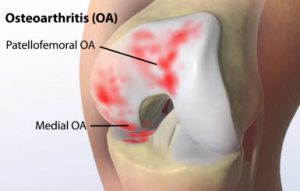
  • Pain with activities such as standing, walking, stair climbing, or getting up from a chair
  • Start up pain or stiffness when activities are initiated from a sitting position
  • Joint stiffness after getting out of bed
  • Swelling in one or more areas of the knee
  • A grating sensation or crunching feeling in the knee during use

How do you treat osteoarthritis?

Symptoms are always treated non-surgically first, but when those solutions fail, total knee arthroplasty is an effective procedure to deal with the pain and disability associated with arthritis in the knee. Approximately 600,000 total knee replacements are performed annually in the United States. A subset of these patients (perhaps 10-30%) may be candidates for a partial knee replacement or unicompartmental replacement. In this procedure, only the affected portion of the knee is replaced leaving the rest of the intact and functioning knee joint in place.

What is the advantage of a partial knee replacement?

The advantages of this procedure, compared to a total knee replacement, are a quicker functional recovery, smaller incisions, less hospitalization and perhaps a more “natural” feel to the operated knee.

Are there any downsides?

Historically, the unicompartmental knee replacement has been a very technically challenging procedure. Small alignment errors may contribute to failure of the procedure.

What advancements have been made in this procedure?

MAKOplasty is the next evolution in unicompartmental knee replacement. In MAKOplasty, a 3-dimensional CT scan of the patient’s leg is obtained. This data is placed into the RIO – Robotic Arm Interactive Orthopedic System pre-operatively. The surgeon then uses 3-dimensional computer modeling to plan the surgery and uses the robotic arm during surgery to complete the plan with great accuracy. The MAKOplasty system also allows for intra-operative adjustments.

What have the results been?

The MAKOplasty procedure is an exciting advancement in partial knee replacement. Studies have shown that it increases the accuracy of the procedure 2-3 times compared to standard techniques. The improved precision of the surgery should lead to better patient outcomes in the short and long term.

Where is it performed?

In Tucson, the procedure is only available at Oro Valley Hospital and is performed by specially trained orthopaedic surgeons.

If you have knee pain well localized to one are of the knee, you may be a candidate. Call the Tucson Orthopaedic Institute in Oro Valley to schedule a consultation with Dr. Bowers.

By Kevin W. Bowers, MD

Advancing Knee Surgery

Oro Valley Hospital is the first hospital in Southern Arizona to provide patients with a revolutionary surgeon-controlled robotic-assisted procedure for partial knee resurfacing.

The Rio Robotic Arm Interactive Orthopedic System allows surgeons to treat patient-specific knee conditions with a level of accuracy and precision not previously possible. Arizona now joins 35 states in the nation using MAKOplasty partial knee resurfacing technology.

For the patient, robotic surgery means nearly a third less time in the hospital and about half the recovery time.

According to the American Academy of Orthopedic Surgeons, knee replacement surgery has become one of the most successful of all joint replacement procedures in the country. The Agency for Healthcare Research & Quality reports that more than 600,000 knee surgeries are performed annually.

The knee is the largest joint in the body, located at the juncture of the femur, the tibia and patella. The femur and the tibia are connected by the anterior and posterior cruciate ligaments. During movement, the joint is cushioned by the meniscus, a tough cartilage material. The patella, or kneecap, is a small bone encased in tendons, that glides up and down in the groove on the top of the femur when the knee is flexed or extended. Where the femur meets the tibia, there is an inner (medial) and outer (lateral) compartment. The patella makes up the third compartment.

Previously, there was no way to repair a single compartment in the knee. When degeneration occurred, a total knee replacement was required.

With this new technology, surgeons can now conduct a minimally invasive procedure to remove early stages of osteoarthritis that have not yet reached all three compartments of the knee. Unlike other robotic systems, the Rio is controlled completely by the surgeon in the operating room, allowing for the greatest precision and saving as much of the knee and surrounding tissue as possible.

From a surgeon’s perspective, the robot provides for an increased level of accuracy,” said Dr. Kevin Bowers, an orthopedic surgeon who has performed nearly a half-dozen partial knee replacement procedures at Oro Valley Hospital. “The robot provides an element of control and an increased level of accuracy that is estimated at two to three times the traditional procedure. Getting that precise alignment can be the key to the longevity of the procedure. The robot’s biggest advantage is that level of accuracy.”

Bowers said he just saw his first patient at his two-week follow up and the patient came into the office without the use of any walking aids. “It’s doing what we expect it to be doing.”

Partial knee replacement procedures had been tried over the years, but with mixed and often disappointing results, Bowers said. “Partial knee replacement can be a little persnickety,” mostly because the ability to provide proper alignment among the three compartments, and to accurately remove degenerative tissue. About 10 years ago there was a revival in the interest in partial knee replacements as technological advances continue to drive research into ways of improving the ability to prolong joint and bone life, he said.

Partial knee resurfacing is not for everyone. Osteoarthritis must be in the early stages, and the procedure is not recommended for patients with inflammatory arthritis as that tends to extend to other parts of the body and caring for a joint at one source will unlikely solve the issue elsewhere.

There are two surgeons using the Rio system at Oro Valley Hospital – Dr. Bowers and Dr. James Benjamin. More orthopedic surgeons are seeking certification, but are not yet using the robot to perform surgeries on patients.

To find out if you are a candidate for this procedure, Oro Valley Hospital hosts free seminars.

To learn more, visit www.orovalleyhospital.com or call the seminar registration line at (866) 694-9355.

By Mary Minor Davis, September 15, 2012

Original source: https://biztucson.com

Advancing Knee Surgery

Oro Valley Hospital is the first hospital in Southern Arizona to provide patients with a revolutionary surgeon-controlled robotic-assisted procedure for partial knee resurfacing.

The Rio Robotic Arm Interactive Orthopedic System allows surgeons to treat patient-specific knee conditions with a level of accuracy and precision not previously possible. Arizona now joins 35 states in the nation using MAKOplasty partial knee resurfacing technology.

For the patient, robotic surgery means nearly a third less time in the hospital and about half the recovery time.

According to the American Academy of Orthopedic Surgeons, knee replacement surgery has become one of the most successful of all joint replacement procedures in the country. The Agency for Healthcare Research & Quality reports that more than 600,000 knee surgeries are performed annually.

The knee is the largest joint in the body, located at the juncture of the femur, the tibia and patella. The femur and the tibia are connected by the anterior and posterior cruciate ligaments. During movement, the joint is cushioned by the meniscus, a tough cartilage material. The patella, or kneecap, is a small bone encased in tendons, that glides up and down in the groove on the top of the femur when the knee is flexed or extended. Where the femur meets the tibia, there is an inner (medial) and outer (lateral) compartment. The patella makes up the third compartment.

Previously, there was no way to repair a single compartment in the knee. When degeneration occurred, a total knee replacement was required.

With this new technology, surgeons can now conduct a minimally invasive procedure to remove early stages of osteoarthritis that have not yet reached all three compartments of the knee. Unlike other robotic systems, the Rio is controlled completely by the surgeon in the operating room, allowing for the greatest precision and saving as much of the knee and surrounding tissue as possible.

From a surgeon’s perspective, the robot provides for an increased level of accuracy,” said Dr. Kevin Bowers, an orthopedic surgeon who has performed nearly a half-dozen partial knee replacement procedures at Oro Valley Hospital. “The robot provides an element of control and an increased level of accuracy that is estimated at two to three times the traditional procedure. Getting that precise alignment can be the key to the longevity of the procedure. The robot’s biggest advantage is that level of accuracy.”

Bowers said he just saw his first patient at his two-week follow up and the patient came into the office without the use of any walking aids. “It’s doing what we expect it to be doing.”

Partial knee replacement procedures had been tried over the years, but with mixed and often disappointing results, Bowers said. “Partial knee replacement can be a little persnickety,” mostly because the ability to provide proper alignment among the three compartments, and to accurately remove degenerative tissue. About 10 years ago there was a revival in the interest in partial knee replacements as technological advances continue to drive research into ways of improving the ability to prolong joint and bone life, he said.

Partial knee resurfacing is not for everyone. Osteoarthritis must be in the early stages, and the procedure is not recommended for patients with inflammatory arthritis as that tends to extend to other parts of the body and caring for a joint at one source will unlikely solve the issue elsewhere.

There are two surgeons using the Rio system at Oro Valley Hospital – Dr. Bowers and Dr. James Benjamin. More orthopedic surgeons are seeking certification, but are not yet using the robot to perform surgeries on patients.

To find out if you are a candidate for this procedure, Oro Valley Hospital hosts free seminars.

To learn more, visit www.orovalleyhospital.com or call the seminar registration line at (866) 694-9355.

By Mary Minor Davis, September 15, 2012

Original source: https://biztucson.com

Search

+