What is Runner’s Knee?

Many people these days live a very active lifestyle, running marathons, triathlons, and playing sports. This is a wonderful thing, but also increases the potential for injuries.  For runners, one of the areas of the body that takes a beating are the knees. Consequently, knee pain and knee injuries are one of the most common complaints that orthopedic surgeons deal with. If you add age and arthritis to the mix, you end up with the perfect recipe for knee pain.  One of the most common complaints is pain around the patella, or kneecap, which causes pain when climbing stairs, but not while running or walking. This condition is called runner’s knee.

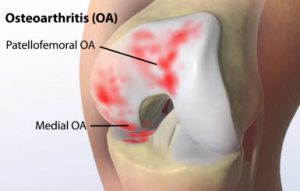
Runner’s knee is caused by the softening or deterioration of the cartilage under the kneecap. This can lead to a misalignment of the knee cap as you bend your knee. The deeper you bend your knee, there is more movement and friction that can cause pain. When you walk or run, you’re not bending your knee very much. However, when you climb the stairs, squat, or stand up, the knee is bent to almost a 90-degree angle.

Although this condition can cause a lot of pain and discomfort, the fix is usually simple. Rest from physically demanding activities, taking anti-inflammatory medication, and strength-building exercises are the first course of action to improve symptoms of runner’s knee. But if the condition is due to a severe injury or arthritis, surgery may ultimately be necessary.

When you are experiencing knee pain, the doctors at Tucson Orthopaedic Institute are thoroughly trained and experienced in all knee issues and conditions. A sports medicine physician can be a good place to start.  Dr. Troy M. Taduran is a sports medicine, fellowship-trained orthopedist who sees patients at three offices. He specializes in a non-surgical approach for sports injuries.

The body is an amazing thing, and pain is how the body communicates when something is wrong. When something hurts and can’t be relieved with a few days of rest and ice, we should listen.  Don’t put off finding out what could be a problem that needs an orthopedics’ touch, or you might be doing more damage to the condition.

We have four conveniently located offices to meet your needs. Call today or go online to request an appointment.


Dr. Troy M. Taduran

New Minimally Invasive Partial Knee Resurfacing: Relieve Osteoarthritis Pain Using Robotic Arm Technology

Everyday I come across patients who are suffering from joint pain in their knee due to osteoarthritis. I am frequently asked about the latest treatment techniques that may offer faster recovery. One procedure that can relieve pain is a minimally invasive technique for partial knee resurfacing. Below are some frequently asked questions about this new procedure.

What is osteoarthritis?

Osteoarthritis (OA), or degenerative joint disease, is characterized by the breakdown and eventual loss of joint cartilage. Cartilage is a substance that serves as the “cushion” for our joints. As the cartilage wears away, eventually the bone is exposed. Severe OA is characterized by “bone-on-bone” changes. Symptoms of OA of the knee include: 

  • Pain with activities such as standing, walking, stair climbing, or getting up from a chair
  • Start up pain or stiffness when activities are initiated from a sitting position
  • Joint stiffness after getting out of bed
  • Swelling in one or more areas of the knee
  • A grating sensation or crunching feeling in the knee during use

How do you treat osteoarthritis?

Symptoms are always treated non-surgically first, but when those solutions fail, total knee arthroplasty is an effective procedure to deal with the pain and disability associated with arthritis in the knee. Approximately 600,000 total knee replacements are performed annually in the United States. A subset of these patients (perhaps 10-30%) may be candidates for a partial knee replacement or unicompartmental replacement. In this procedure, only the affected portion of the knee is replaced leaving the rest of the intact and functioning knee joint in place.

What is the advantage of a partial knee replacement?

The advantages of this procedure, compared to a total knee replacement, are a quicker functional recovery, smaller incisions, less hospitalization and perhaps a more “natural” feel to the operated knee.

Are there any downsides?

Historically, the unicompartmental knee replacement has been a very technically challenging procedure. Small alignment errors may contribute to failure of the procedure.

What advancements have been made in this procedure?

MAKOplasty is the next evolution in unicompartmental knee replacement. In MAKOplasty, a 3-dimensional CT scan of the patient’s leg is obtained. This data is placed into the RIO – Robotic Arm Interactive Orthopedic System pre-operatively. The surgeon then uses 3-dimensional computer modeling to plan the surgery and uses the robotic arm during surgery to complete the plan with great accuracy. The MAKOplasty system also allows for intra-operative adjustments.

What have the results been?

The MAKOplasty procedure is an exciting advancement in partial knee replacement. Studies have shown that it increases the accuracy of the procedure 2-3 times compared to standard techniques. The improved precision of the surgery should lead to better patient outcomes in the short and long term.

Where is it performed?

In Tucson, the procedure is only available at Oro Valley Hospital and is performed by specially trained orthopaedic surgeons.

If you have knee pain well localized to one are of the knee, you may be a candidate. Call the Tucson Orthopaedic Institute in Oro Valley to schedule a consultation with Dr. Bowers.

By Kevin W. Bowers, MD

Exercising Caution: Too Much, Too Fast, Too Soon

If someday you find yourself sitting around the house with your leg in the air, the limb wrapped in ice and towels – looking like a corn dog – you may need to see a surgeon. William Prickett, MD, an orthopedic consultant for the University of Arizona athletics department (and sports medicine surgeon at Tucson Orthopaedic Institute), has seen it all.

“The most common thing that leads to injury is the proverbial ‘terrible too’s’ – they do too much, too fast, and they do it too soon.” The CDC reports that in 2011, unintentional overexertion was the second-leading cause of non-fatal injuries in people aged 25-55. “I tend to see lots of shoulder problems from overuse injuries related to racquet sports and golfing.”

“In younger patients, in the shoulder, there tends to be more surgery that’s related to instability and it involves reconstructing and repairing ligaments. More common in the weekend warrior or older athlete is rotator cuff work.” 
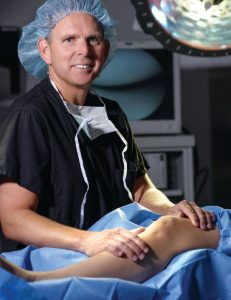
If, like an automobile manufacturer, Dr. Prickett could recall one body part, it would probably be the shoulder.

“The shoulder is very much dependent on muscles and soft tissues for stability. The range of motion that we have puts that joint at significant risk. The amount of force that we create just throwing a baseball is excessive and sometimes more than I think it was engineered to do.”

Overuse injuries can be prevented by cross training and using good form and technique, according to Dr. Prickett. Overuse injuries are different than acute injuries. “The acute traumatic injuries often are just unlucky,” he says. “Somebody gets injured on a trampoline or playing basketball. They may have been playing for years and for whatever reason they were unlucky that day.”

So what are the signs that you should see a doctor?

“If someone is having difficulty with weight bearing, if their extremity looks different, there’s numbness or tingling, and severe pain that’s not improving – all of those things are red flags saying this is not just muscle soreness.”

Dr. Prickett has some new tools he can use to repair injured joints.

“There have been advances in things such as growth factors and platelets – using your own blood to treat your injuries.”

This is called platelet-rich plasma. “We use a component of the patient’s own blood that is injected back into the site of injury, with the goal of allowing the body to heal itself.”

He also can use tissue engineering, replacing cartilage defects, most commonly in the knee. “There are techniques that allow you to remove small pieces of cartilage, expand them in the lab and then put them back into the defect,” he says.

“The most common thing that we see done now is a rotator cuff repair, which is a shoulder procedure to repair torn tendons.” Historically this was done where the muscle was divided and then the tendon was repaired back to the bone, but now with improvements in arthroscopic techniques it can be done without cutting the muscle.

“This is due to advances in the ability to visualize structures and new instrumentation and fixation techniques,” Dr. Prickett says. “Not only can we see better, but we can manipulate tissue better, and we’ve had advances in the ability to fix tendon to bone.”

Tendons connect muscle to bone, which are different than ligaments that connect bone to bone. “In the shoulder, most injuries occur where the tendon attaches to the bone. You can see weakening of the tendon and tearing of the tendon.” This is where Dr. Prickett gets down to some serious suturing.

“A repair of the tendon is hooking the tendon back into the bone. We have anchors that have suture attached to them, so we put an anchor in the bone. Suture then gets wrapped around the torn tendon and you tie it back together. These type of tendon injuries don’t heal on their own, so you need to repair it,” he says.

Once repaired, the patient may feel a little too good. “One of the struggles we have as physicians with any type of reconstructive procedure is that there are times when they feel great, but it’s not in the patient’s best interest to high load that joint with exercise.”

One way to try and stay out of his office is to take care of your feet.

“There’s been a big trend in barefoot running, but if you can keep your feet covered, I don’t understand why you wouldn’t,” he says. “The key thing is comfort. I see a lot of patients who try new things, new trends. Don’t try to make your foot or your gait fit into something that’s not comfortable for you, because that’s where we see a lot of these overuse injuries. To me it’s a little like trying to put a square peg in a round hole. If it doesn’t feel right, if it hurts, stop.”

He can’t say if he has a favorite procedure he performs. “All of them are interesting and enjoyable on my part, because you get people back to doing things that they want to do. I love working on athletes’ knees and reconstructing their ACL, because it’s exciting to see athletes be able to get back to participate in what they enjoy doing.” He concludes, “It’s just as exciting to see a soccer player get back on the field as it is to see a grandparent feeling comfortable picking up their grandchild.”

For more information about Dr. Prickett, or to make an appointment, please contact the Northwest office.

Excerpt from the September 2014 issue of Tucson Lifestyle Magazine

Written by Owen Rose

Photo credit: Kris Hanning

View the article in its entirety

Search

+