
5 Signs You May Have Hip Arthritis

Written by: Dr. Ali Dalal 

Degenerative joint disease is a very common cause of hip pain. Figuring out whether the true source of pain is the hip or the back can be a diagnostic challenge for both the doctor and the patient. Indeed, several patients have both back and hip problems. Here are 5 common signs that the pain you are experiencing is coming from your hip.

1. Do I need a different car?

It’s something we do every day and for some people, several times a day. For patients with hip arthritis, the simple act of swinging their leg to get in and out of a car can cause severe discomfort.

via GIPHY


2. “Honey, can you grab my flip-flops?”

Stooping forward to put on shoes and socks becomes extremely difficult and or painful due to loss of mobility. Frequently patients will report that their husband or wife assists them with this activity. In places with warmer climates, patients resort to wearing slip-on shoes.

via GIPHY

3. Get between the toes!

Frequently patients with hip arthritis experience pain when bending to wash their feet in the shower.

via GIPHY

4. Can’t stop counting sheep?

In advanced cases, patients have sleep disturbances because they cannot position their hip in a comfortable way to fall asleep. Oftentimes patients will only be able to sleep with a pillow underneath the thigh.

via GIPHY

5. It can’t be my hip; the pain is in the front.

Contrary to what many people think, the anatomic location of the hip is not the side of the upper thigh. The hip is located in the front in the crease of the groin. Groin pain and limited hip motion are the most reproducible signs of a hip problem.

via GIPHY

If any of these symptoms sound familiar, you may be suffering from hip arthritis. The diagnosis can be confirmed with a quick X-ray and treatment is usually non-operative in the early stages.  Come see Dr. Dalal at Tucson Orthopaedic Institute so you can stop living with pain and start living your life!
What is Runner’s Knee?

Many people these days live a very active lifestyle, running marathons, triathlons, and playing sports. This is a wonderful thing, but also increases the potential for injuries.  For runners, one of the areas of the body that takes a beating are the knees. Consequently, knee pain and knee injuries are one of the most common complaints that orthopedic surgeons deal with. If you add age and arthritis to the mix, you end up with the perfect recipe for knee pain.  One of the most common complaints is pain around the patella, or kneecap, which causes pain when climbing stairs, but not while running or walking. This condition is called runner’s knee.

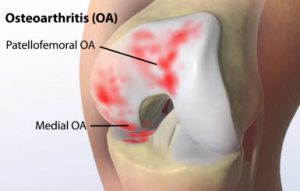
Runner’s knee is caused by the softening or deterioration of the cartilage under the kneecap. This can lead to a misalignment of the knee cap as you bend your knee. The deeper you bend your knee, there is more movement and friction that can cause pain. When you walk or run, you’re not bending your knee very much. However, when you climb the stairs, squat, or stand up, the knee is bent to almost a 90-degree angle.

Although this condition can cause a lot of pain and discomfort, the fix is usually simple. Rest from physically demanding activities, taking anti-inflammatory medication, and strength-building exercises are the first course of action to improve symptoms of runner’s knee. But if the condition is due to a severe injury or arthritis, surgery may ultimately be necessary.

When you are experiencing knee pain, the doctors at Tucson Orthopaedic Institute are thoroughly trained and experienced in all knee issues and conditions. A sports medicine physician can be a good place to start.  Dr. Troy M. Taduran is a sports medicine, fellowship-trained orthopedist who sees patients at three offices. He specializes in a non-surgical approach for sports injuries.

The body is an amazing thing, and pain is how the body communicates when something is wrong. When something hurts and can’t be relieved with a few days of rest and ice, we should listen.  Don’t put off finding out what could be a problem that needs an orthopedics’ touch, or you might be doing more damage to the condition.

We have four conveniently located offices to meet your needs. Call today or go online to request an appointment.


Dr. Troy M. Taduran

New Minimally Invasive Partial Knee Resurfacing: Relieve Osteoarthritis Pain Using Robotic Arm Technology

Everyday I come across patients who are suffering from joint pain in their knee due to osteoarthritis. I am frequently asked about the latest treatment techniques that may offer faster recovery. One procedure that can relieve pain is a minimally invasive technique for partial knee resurfacing. Below are some frequently asked questions about this new procedure.

What is osteoarthritis?

Osteoarthritis (OA), or degenerative joint disease, is characterized by the breakdown and eventual loss of joint cartilage. Cartilage is a substance that serves as the “cushion” for our joints. As the cartilage wears away, eventually the bone is exposed. Severe OA is characterized by “bone-on-bone” changes. Symptoms of OA of the knee include: 

  • Pain with activities such as standing, walking, stair climbing, or getting up from a chair
  • Start up pain or stiffness when activities are initiated from a sitting position
  • Joint stiffness after getting out of bed
  • Swelling in one or more areas of the knee
  • A grating sensation or crunching feeling in the knee during use

How do you treat osteoarthritis?

Symptoms are always treated non-surgically first, but when those solutions fail, total knee arthroplasty is an effective procedure to deal with the pain and disability associated with arthritis in the knee. Approximately 600,000 total knee replacements are performed annually in the United States. A subset of these patients (perhaps 10-30%) may be candidates for a partial knee replacement or unicompartmental replacement. In this procedure, only the affected portion of the knee is replaced leaving the rest of the intact and functioning knee joint in place.

What is the advantage of a partial knee replacement?

The advantages of this procedure, compared to a total knee replacement, are a quicker functional recovery, smaller incisions, less hospitalization and perhaps a more “natural” feel to the operated knee.

Are there any downsides?

Historically, the unicompartmental knee replacement has been a very technically challenging procedure. Small alignment errors may contribute to failure of the procedure.

What advancements have been made in this procedure?

MAKOplasty is the next evolution in unicompartmental knee replacement. In MAKOplasty, a 3-dimensional CT scan of the patient’s leg is obtained. This data is placed into the RIO – Robotic Arm Interactive Orthopedic System pre-operatively. The surgeon then uses 3-dimensional computer modeling to plan the surgery and uses the robotic arm during surgery to complete the plan with great accuracy. The MAKOplasty system also allows for intra-operative adjustments.

What have the results been?

The MAKOplasty procedure is an exciting advancement in partial knee replacement. Studies have shown that it increases the accuracy of the procedure 2-3 times compared to standard techniques. The improved precision of the surgery should lead to better patient outcomes in the short and long term.

Where is it performed?

In Tucson, the procedure is only available at Oro Valley Hospital and is performed by specially trained orthopaedic surgeons.

If you have knee pain well localized to one are of the knee, you may be a candidate. Call the Tucson Orthopaedic Institute in Oro Valley to schedule a consultation with Dr. Bowers.

By Kevin W. Bowers, MD

Search

+