Could Your Foot Pain Be Caused by a Problem With Your Back?

While it doesn’t seem like there should be such a connection, considering how sensitive and large the back is, foot pain can in fact be related to your back. It is not uncommon to have pain in the legs or feet without any significant lower back pain, yet the problem is still originating in the lumbar region of the lower back. Blame the funny way our nerves work sometimes, sending signals all over the place.


You might blame that foot pain on the sciatic nerve

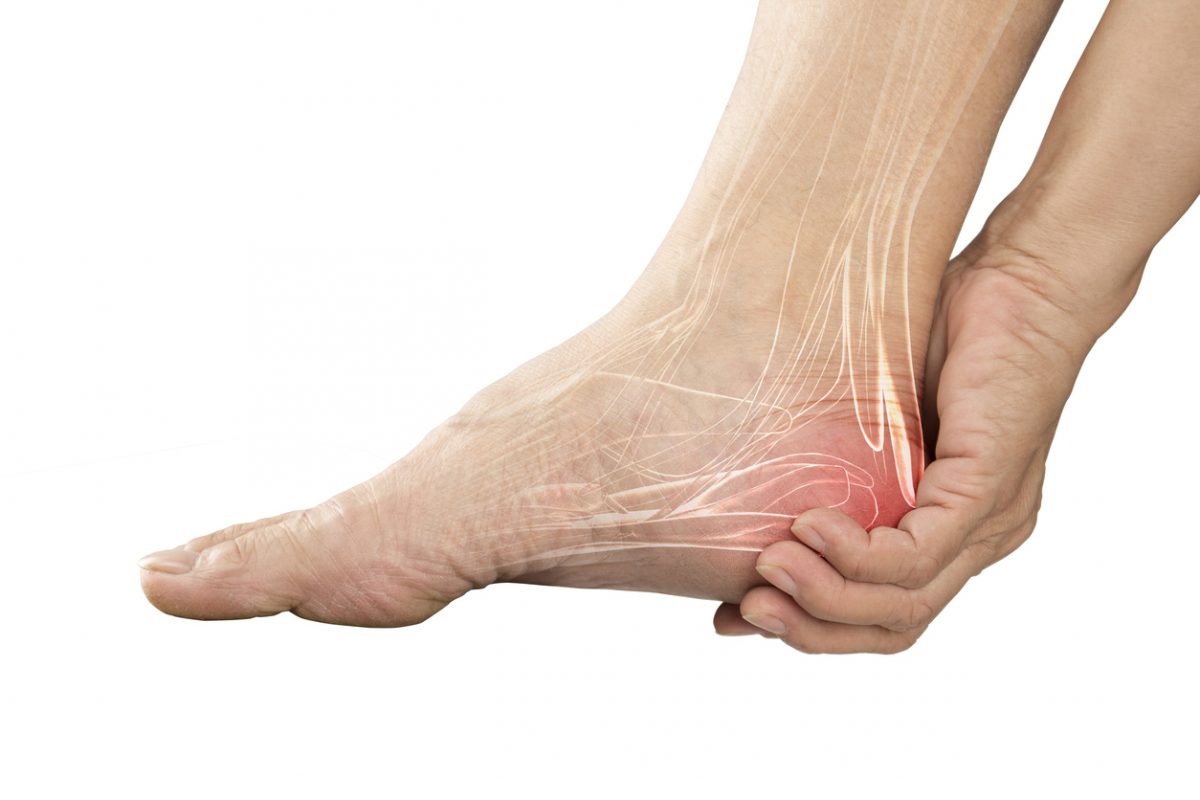
If a nerve root in the lower back – or lumbar area of the spine – is irritated or compressed, this lower back condition can cause pain to radiate along the sciatic nerve all the way to the patient’s foot.

The sciatic nerve is a large nerve that begins near the base of the spine, extending downward through the lower extremities, traveling through the hips, buttocks, and legs, before coming to an end in the feet near the toes.


Symptoms of Sciatica

As we age, the lumbar spine begins to deteriorate and weaken. This can impact the sciatic nerve, and lead to symptoms of sciatica, including:

·        Pain

·        Numbness

·        Tingling

·        Weakness

·        Slower reflexes

·        Muscle spasms

The sciatic nerve is very important, as it sends sensory and motor information to much of the lower body. The sciatic nerve is what sends the commands which allow for basic movement, such as walking and sitting. When this nerve becomes constricted, inflamed, or compressed in the lumbar spine, often due to degenerative spine conditions that develop in the lower back, the set of symptoms is known as “sciatica”.


Conditions that can cause sciatica

There are several degenerative spine conditions which can lead to the impingement or compression of the sciatic nerve, including:

·        Lumbar degenerative disc disease

·        Facet disease

·        Lumbar spinal stenosis

·        Lumber herniated disc

·        Foraminal stenosis

·        Isthmic spondylolisthesis

·        Osteoarthritis


Treatment Options

Once your doctor diagnoses the cause of your pain as sciatica, a series of conservative treatment options may be recommended. Often, a combination of these treatments can sufficiently manage the problem. These may include:

·        Activity modification

·        Oral nonsteroidal anti-inflammatory medications

·        Epidural injections

·        Low-impact exercises

·        Stretching techniques

·        Physical therapy

When these conservative approaches to managing sciatica fail, it may be necessary to consider addressing the underlying cause with surgery.


If you are experiencing pain in your foot, or lower extremities, contact the Tucson Orthopaedic Instituteat one of their several area locations. You can schedule an appointment online, to be examined by one of their highly qualified, board-certified orthopedic surgeons. At Tucson Orthopaedic Institute, there are many non-invasive treatment options for diagnosing and treating sciatica, and we will work with you every step of the way until your pain subsides.

Post-Operative Foot & Ankle Helpful Hints

You just had surgery on either your foot or ankle, or possibly both. These are some helpful hints from Tucson Orthopaedic Institute’s foot doctors to best manage your pain, swelling and discomfort after the procedure. Any procedure is a big procedure, so please do all that you can to take the best care of yourself after the surgery to ensure the best possible outcome.

1. Pain Management

  • Begin taking prescription pain medications given to you the same day of your surgery, BEFORE you go to bed.
  • If you had a nerve block performed, there is a good chance that you will feel fine before going to bed. However, there is also a good chance the nerve block will wear off while sleeping, so start taking the prescription medications before you go to bed.
  • The pain will be better controlled if you start to treat it (i.e. taking prescription medications) before it begins, instead of trying to manage the pain after it has started.

2. Swelling Management

  • Swelling after surgery can significantly contribute to post-operative pain, especially with foot and ankle surgery.
  • By elevating the foot and ankle as often as you can for the first several weeks after surgery, the swelling can be greatly reduced, and the painful symptoms can be improved, significantly.
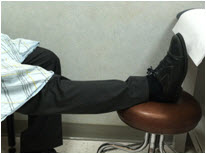
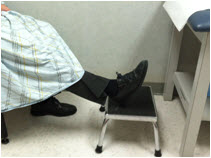
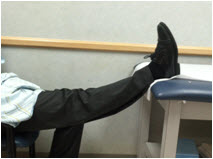
  • When elevating, elevate the affected foot and ankle above the level of the hip:


Ideal (foot/ankle higher than hip)

Not Okay (foot/ankle level with hip)   Not Okay (foot/ankle lower than hip)

3. Ice/Ice Packs/Etc.

  • Ice is also a good adjunct to help with pain and swelling.
  • If the discharge information you received from the surgery center mentions it is okay for you to ice the area of your surgery, then do so for 15 minutes every 1 to 2 hours. Frozen bags of vegetables also work well for this.
  • If the discharge information does not say it is okay for you to ice, then please do not do so. This may be the case if you had surgery on your toes. In this case, only keep your foot elevated as mentioned above, and avoid placing any ice/ice packs/etc. onto the area.

4. Nausea

  • You may have also been given a prescription medication for nausea (i.e. phenergan 12.5 mg)
  • Nausea is common after surgery. Nausea can also occur with the prescription pain medications you were prescribed, as many of them have a tendency to slow down how quickly things move through the stomach and intestines.
  • Many patients may not need this medication, but if you are prone to nausea, it is also a good idea to take this prescription medication the night of your surgery, before you go to bed.

5. Long-Term Symptom Management and Expectations

  • It is very common for the toes/foot/ankle to remain somewhat swollen for several months after surgery. Typically, this process will gradually improve over the course of an entire 12 months! So, if you do continue to have some swelling even 3 to 6 months after your surgery, there is still a good 6 to 9 months of time where this will improve. Don’t be discouraged. Instead, continue to keep the foot elevated as mentioned in #2, above, as often as you can.
  • As you make progress from your day of surgery, the amount of weight bearing you will be allowed to do will change. As this weight bearing increases, there will very likely be an increase in the amount of swelling and discomfort you have with the surgical side. To best control the discomfort and swelling, do any of the following, or a combination of the following:
    1. Place less weight on the surgical side.
    2. Spend less time, over the course of the day, placing weight on the surgical side.
    3. When you are not weight bearing, continue to keep the extremity elevated as mentioned above.
    4. Apply ice to the affected area as mentioned above.

**Important Note: DO NOT initiate weight bearing until you have been instructed to do so.

To learn more about this article, or to make an appointment with a Tucson Orthopaedic doctor or specialist, please contact the East office.

Written by Eric P. Anctil, MD and Matthew W. Byers, PA-C

Ankle Replacement a Viable Option for Injuries

SIERRA VISTA – Three and a half years ago, Hereford-based handyman Michael Hill was in his backyard, working on his travel trailer, when he took a spill off of a six-foot ladder. “It wasn’t a far fall, but I fell wrong,” Hill said in January. That short fall would result in a fractured tibia, or the shin bone, just where it meets the foot and the ankle. “I just sheared a piece right off,” he said.

After a trip to the Sierra Vista Regional Health Center and two metal plates and 17 screws later, Hill thought he was on the road to recovery, but for months he was plagued by constant, sharp pain. The calcification resulting from the break was harder than the bone itself, and any movement was wearing out the cartilage in the joint. “I was in constant pain,” he said.

Determined to continue working, for a while, Hill simply grit his teeth and got back to taking jobs around the Sierra Vista area. “I do handyman work, so it’s constant walking,” he said. “Every time you got up to do something, there was a constant grinding” of the ankle. Some days, the pain was so bad, Hill would have to take the day off. On the worst days, he thought long and hard about even getting out of bed. “The pain would get to be so much, you’d quit early, or call and cancel a job because you just couldn’t get up,” he said.

About nine months after his initial surgery, Hill elected to go back under the knife in the hopes that removing the metal plates would offer him some relief, to little affect. Soon, more and more of his free time was spent on the Internet, researching injuries like his and looking for any possible solution beyond an ankle fusion, what he had been told was the only surgery local doctors would perform.

After three months of reading medical websites, visiting online forums and speaking with others who have experienced similar injuries, Hill knew that a fusion, which would dull much of the pain but result in very limited mobility, was not an option. “Ankle fusion was totally out of the question for me. At the time, I was 46. You’re too active at that age,” he said.

Eventually, his search led him to the website of Wright Medical Technology’s IN-BONE total ankle replacement, a prothesis that is implanted into the tibia in segments to form a long stem, requiring a smaller piece of the bone to be removed during surgery, and therefore retain much of its original strength.

The surgery entails the use of a combination of a specialized brace to steady the foot, allowing for more accurate x-rays and implantation of the prosthesis. “That’s how they get a proper alignment,” Hill said.

After learning as much as he could about the procedure, Hill set out to find a surgeon, and soon ended up in the office of Dr. Geoffrey Landis, a fellowship-trained foot and ankle orthopaedic surgeon with the Tucson Orthopaedic Institute.

“In Michael’s case, his options were really an ankle fusion versus an ankle replacement,” Landis said. “He was well aware of the options and the subsequent results of those options.” Landis added, “Thankfully, he worked very hard throughout his therapy to maintain motion in his ankle,” making him an even more appropriate candidate for ankle replacement as opposed to ankle fusion.

Over the last five to 10 years, ankle replacement surgery has progressed enough that it has become a more viable option on the scale of the more commonly seen hip replacement. “We now look at ankle replacement as a way to give people a more functional return to life along with pain relief,” Landis said.

In April of 2011, after months of living in debilitating pain and nearly two years after the initial injury, Hill went in for the ankle replacement surgery in Tucson. After a successful surgery with “little to no complications to speak of,” Landis said Hill’s subsequent rehabilitation and recovery have been a model success. “Here I am two years later and it’s the best move of my life,” said Hill, who is pain-free with 90 to 95 percent of his original mobility. “I can’t run, but that’s fine. I don’t plan on doing much of that anyway.”

Following 10 months of physical therapy sessions twice a week, his productivity is back to near the original level as well. “It’s easier to get around and do everything,” he said. “I’ve never broken a bone in my life until I got older. I don’t have anything to compare it to. All I know is I’m a hell of a lot happier.”

These types of ankle replacement surgeries are becoming more common, Landis said. He, himself, will perform about 15 to 20 of them every year.

Hill said he wanted to share his story because, before his injury and subsequent research, he had heard very little in the way of ankle replacement surgery. “Knee and hip replacement surgeries are so widely publicized, but you never hear about this,” he said. “I thought if word got out, more people could benefit.”

Written by Derek Jordan

As published in the Sierra Vista Herald, January 20, 2013

Search

+