Exercising Caution: Too Much, Too Fast, Too Soon

If someday you find yourself sitting around the house with your leg in the air, the limb wrapped in ice and towels – looking like a corn dog – you may need to see a surgeon. William Prickett, MD, an orthopedic consultant for the University of Arizona athletics department (and sports medicine surgeon at Tucson Orthopaedic Institute), has seen it all.

“The most common thing that leads to injury is the proverbial ‘terrible too’s’ – they do too much, too fast, and they do it too soon.” The CDC reports that in 2011, unintentional overexertion was the second-leading cause of non-fatal injuries in people aged 25-55. “I tend to see lots of shoulder problems from overuse injuries related to racquet sports and golfing.”

“In younger patients, in the shoulder, there tends to be more surgery that’s related to instability and it involves reconstructing and repairing ligaments. More common in the weekend warrior or older athlete is rotator cuff work.” 
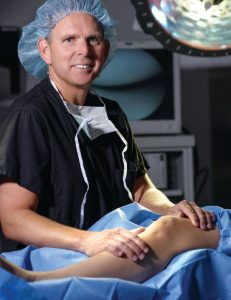
If, like an automobile manufacturer, Dr. Prickett could recall one body part, it would probably be the shoulder.

“The shoulder is very much dependent on muscles and soft tissues for stability. The range of motion that we have puts that joint at significant risk. The amount of force that we create just throwing a baseball is excessive and sometimes more than I think it was engineered to do.”

Overuse injuries can be prevented by cross training and using good form and technique, according to Dr. Prickett. Overuse injuries are different than acute injuries. “The acute traumatic injuries often are just unlucky,” he says. “Somebody gets injured on a trampoline or playing basketball. They may have been playing for years and for whatever reason they were unlucky that day.”

So what are the signs that you should see a doctor?

“If someone is having difficulty with weight bearing, if their extremity looks different, there’s numbness or tingling, and severe pain that’s not improving – all of those things are red flags saying this is not just muscle soreness.”

Dr. Prickett has some new tools he can use to repair injured joints.

“There have been advances in things such as growth factors and platelets – using your own blood to treat your injuries.”

This is called platelet-rich plasma. “We use a component of the patient’s own blood that is injected back into the site of injury, with the goal of allowing the body to heal itself.”

He also can use tissue engineering, replacing cartilage defects, most commonly in the knee. “There are techniques that allow you to remove small pieces of cartilage, expand them in the lab and then put them back into the defect,” he says.

“The most common thing that we see done now is a rotator cuff repair, which is a shoulder procedure to repair torn tendons.” Historically this was done where the muscle was divided and then the tendon was repaired back to the bone, but now with improvements in arthroscopic techniques it can be done without cutting the muscle.

“This is due to advances in the ability to visualize structures and new instrumentation and fixation techniques,” Dr. Prickett says. “Not only can we see better, but we can manipulate tissue better, and we’ve had advances in the ability to fix tendon to bone.”

Tendons connect muscle to bone, which are different than ligaments that connect bone to bone. “In the shoulder, most injuries occur where the tendon attaches to the bone. You can see weakening of the tendon and tearing of the tendon.” This is where Dr. Prickett gets down to some serious suturing.

“A repair of the tendon is hooking the tendon back into the bone. We have anchors that have suture attached to them, so we put an anchor in the bone. Suture then gets wrapped around the torn tendon and you tie it back together. These type of tendon injuries don’t heal on their own, so you need to repair it,” he says.

Once repaired, the patient may feel a little too good. “One of the struggles we have as physicians with any type of reconstructive procedure is that there are times when they feel great, but it’s not in the patient’s best interest to high load that joint with exercise.”

One way to try and stay out of his office is to take care of your feet.

“There’s been a big trend in barefoot running, but if you can keep your feet covered, I don’t understand why you wouldn’t,” he says. “The key thing is comfort. I see a lot of patients who try new things, new trends. Don’t try to make your foot or your gait fit into something that’s not comfortable for you, because that’s where we see a lot of these overuse injuries. To me it’s a little like trying to put a square peg in a round hole. If it doesn’t feel right, if it hurts, stop.”

He can’t say if he has a favorite procedure he performs. “All of them are interesting and enjoyable on my part, because you get people back to doing things that they want to do. I love working on athletes’ knees and reconstructing their ACL, because it’s exciting to see athletes be able to get back to participate in what they enjoy doing.” He concludes, “It’s just as exciting to see a soccer player get back on the field as it is to see a grandparent feeling comfortable picking up their grandchild.”

For more information about Dr. Prickett, or to make an appointment, please contact the Northwest office.

Excerpt from the September 2014 issue of Tucson Lifestyle Magazine

Written by Owen Rose

Photo credit: Kris Hanning
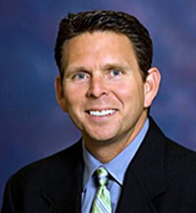
View the article in its entirety

Stay Active with Safe Sports Practices and Proper Medical Care

We all know that regular exercise is an essential part of a healthy lifestyle. Exercise makes you look and feel good, promoting greater muscle strength, endurance, flexibility, weight control, and cardiovascular fitness.

However, too much of a good thing can lead to an injury that can sideline you from the activities you enjoy. You don’t have to be a competitive athlete to have a sports injury, which is simply an injury that occurs during sports or exercise. A sports injury can happen to anyone at any age; although they are more common as we grow older, and more often occur among women, due to differences in body structure. 

Sports injuries can involve any part of the body, but generally refer to an injury that involves the muscles, bones or a soft tissue, such as cartilage in the knee. These injuries usually occur from improper training or conditioning, insufficient warm-up and stretching before an activity, using the wrong equipment, or doing too much, too fast.

Sports injuries fall into two primary categories: acute and chronic. An acute injury involves a specific event that causes trauma, such as a fall or a collision. A chronic injury occurs with repetitive motions and excessive cumulative strain on the musculoskeletal system.

Prompt treatment of both acute and chronic injuries is important in avoiding further injury. Injuries left untreated or not allowed to fully heal can lead to recurrent injuries, or develop into more serious long-term problems, such as osteoarthritis.

It’s important to distinguish muscle soreness from injury in deciding whether to seek medical help. The traditional credo of rest, ice, compression and elevation is effective for home care. However, if you’ve tried these steps after injury and pain and swelling do not improve, contact your doctor. Signs that your injury needs medical attention include worsening or persistent pain, swelling, numbness or abnormal appearance.

If you suspect you’ve sustained a sports injury, a good place to start is with your primary care provider. He or she may consult with a sports medicine specialist to facilitate with diagnosis and treatment. Depending on your injury, you may receive care from an orthopedic doctor or a rehabilitative therapist. An orthopedic doctor specializes in the diagnosis and treatment of the musculoskeletal system; a physical therapist works in partnership with your sports medicine doctor to rehabilitate your injury and return you to athletics safely.

Treating a sports injury is a gradual process. Improving range of motion as pain resolves is the first step to help speed healing. Rehabilitation is based on a progression of activities to help build flexibility, endurance, and strength, as well as proper balance and body mechanics. In addition to exercise, your therapy may include various modalities including but not limited to: electrostimulation (mild electrical current to reduce pain and swelling and increase muscle strength), cryotherapy (ice packs to limit blood flow to injured tissues), heat, ultrasound and massage.

Arthroscopic surgery, an operation that employs small incisions to diagnose and fix joint abnormalities, has greatly enhanced physicians’ ability to repair athletic injuries without invasive surgery, resulting in less trauma and downtime for the patient. Other new advances being studied include tissue engineering, in which a patient’s own healthy cartilage or cells are transplanted to an injured area to speed healing.

Benefits of rehabilitative therapy include restoration of function, less pain, improved range of motion, a more timely and safe return to sports, and recreational activities. Other benefits include an improved a sense of wellbeing, cardiovascular fitness, strength, flexibility, balance, and muscle coordination.

Play It Safe

Practicing smart sports and exercise habits can prevent an injury on the front end. The National Institute of Arthritis and Musculoskeletal and Skin Diseases recommends the following techniques to avoid injury:

  • When doing knee bends, don’t bend your knees more than halfway.
  • Don’t twist your knees when you stretch; keep your feet flat.
  • When jumping, land with your knees bent.
  • Do warm-up exercises before playing any sport.
  • Always stretch before you play or exercise.
  • Cool down after hard sports or workouts.
  • Wear shoes that fit properly, are stable and absorb shock.
  • Exercise on the soft surfaces; don’t run on asphalt or concrete.
  • Run on flat surfaces.
  • Don’t be a weekend warrior, i.e., engaging in a week’s worth of activity in a day or two.
  • Learn to do your sport right. Use proper form to reduce your risk of overuse injuries.
  • Use the appropriate safety gear for the sport you are playing.
  • Build up your exercise level gradually. Know your body’s limits.

Sports Injuries

Part of treating a sports injury is being able to explain symptoms to your doctor. Here is a list of the most common types of sports injuries (from the National Institute of Arthritis and Musculoskeletal and Skin Diseases)

Sprain: A stretch of tear of a ligament, the band of connective tissues that joins the end of one bone with another

Symptoms: Tenderness or pain, bruising, swelling, inability to move a limb or joint, instability

Strain: A twist, pull or tear to a muscle or tendon, which is tissue that connects muscle to bone

Symptoms: Pain, muscle spasm and loss of strength

Dislocated joint: When two bones that come together to form a joint become separated, through impact sports, excessive stretching or falling

Symptoms: Severe pain, joint is visibly altered and moves unnaturally, or cannot be bent or straightened properly

Fracture: A break in the bone that can occur from either a quick, one-time injury (acute fracture) or from repeated stress to the bone over time (stress fracture)

Symptoms: Pain at the site and inability to bear weight (acute) or pain at the site that worsens with weight-bearing activity (stress)

Article written by William Prickett, MD, Tucson Orthopaedic Institute Sports Medicine Surgeon

Published on TusconLocalMedia.com, Wednesday, March 13, 2013

Prickett on Becker’s List of 65 Outstanding Shoulder Surgeons and Specialists

Chicago – Becker’s Orthopedic, Spine & Pain Management Review is pleased to announce the inclusion of Dr. William Prickett on its list: “65 Outstanding Shoulder Surgeons and Specialists”. The physicians on this list were selected based on their expertise in shoulder surgery, leadership positions, excellent research and reputation among other shoulder specialists. The editorial team publicly solicited recommendations for this list and chose additional physicians through extensive internal research. Physicians do not pay and cannot pay for inclusion on this list.

William D. Prickett, MD (Tucson Orthopaedic Institute)

Dr. Prickett has clinical and research interests in sports medicine and shoulder surgery. He has authored several articles on topics such as shoulder instability in athletes. Dr. Prickett earned his medical degree at Emory University School of Medicine in Atlanta and completed his orthopedic surgery residency at Washington University Medical Center in St. Louis. His additional training includes a sports medicine and shoulder service fellowship at the Hospital for Special Surgery in New York City. He has also spent time working with the New York Giants. During his career, he has given several presentations at professional meetings of the American Academy of Orthopaedic Surgeons and American Shoulder and Elbow Surgeons.

The Becker’s editorial team devised the list after extensive research and public solicitation for outstanding candidates. The list was also vetted through shoulder specialists from around the country before finalization. Members of the list are often leaders of their groups, winners of prestigious research awards and team physicians for professional athletes. Each member of the list underwent rigorous review before inclusion as an outstanding specialist in the field of shoulder surgery.

We congratulate each physician selected for inclusion on this list. If you would like to learn more about this list or future lists slated for publication in Becker’s Orthopedic, Spine & Pain Management Review, please contact assistant editor Laura Miller at laura@beckersasc.com.

Becker’s Orthopedic, Spine & Pain Management Review is an online and print publication with a target audience of physicians, group leaders and industry experts. The online publication receives more than 147,000 pageviews per month and the print publication circulates four times per year. The publication also sends out free electronic newsletters twice weekly.

Search

+