Ankle Replacement a Viable Option for Injuries

SIERRA VISTA – Three and a half years ago, Hereford-based handyman Michael Hill was in his backyard, working on his travel trailer, when he took a spill off of a six-foot ladder. “It wasn’t a far fall, but I fell wrong,” Hill said in January. That short fall would result in a fractured tibia, or the shin bone, just where it meets the foot and the ankle. “I just sheared a piece right off,” he said.

After a trip to the Sierra Vista Regional Health Center and two metal plates and 17 screws later, Hill thought he was on the road to recovery, but for months he was plagued by constant, sharp pain. The calcification resulting from the break was harder than the bone itself, and any movement was wearing out the cartilage in the joint. “I was in constant pain,” he said.

Determined to continue working, for a while, Hill simply grit his teeth and got back to taking jobs around the Sierra Vista area. “I do handyman work, so it’s constant walking,” he said. “Every time you got up to do something, there was a constant grinding” of the ankle. Some days, the pain was so bad, Hill would have to take the day off. On the worst days, he thought long and hard about even getting out of bed. “The pain would get to be so much, you’d quit early, or call and cancel a job because you just couldn’t get up,” he said.

About nine months after his initial surgery, Hill elected to go back under the knife in the hopes that removing the metal plates would offer him some relief, to little affect. Soon, more and more of his free time was spent on the Internet, researching injuries like his and looking for any possible solution beyond an ankle fusion, what he had been told was the only surgery local doctors would perform.

After three months of reading medical websites, visiting online forums and speaking with others who have experienced similar injuries, Hill knew that a fusion, which would dull much of the pain but result in very limited mobility, was not an option. “Ankle fusion was totally out of the question for me. At the time, I was 46. You’re too active at that age,” he said.

Eventually, his search led him to the website of Wright Medical Technology’s IN-BONE total ankle replacement, a prothesis that is implanted into the tibia in segments to form a long stem, requiring a smaller piece of the bone to be removed during surgery, and therefore retain much of its original strength.

The surgery entails the use of a combination of a specialized brace to steady the foot, allowing for more accurate x-rays and implantation of the prosthesis. “That’s how they get a proper alignment,” Hill said.

After learning as much as he could about the procedure, Hill set out to find a surgeon, and soon ended up in the office of Dr. Geoffrey Landis, a fellowship-trained foot and ankle orthopaedic surgeon with the Tucson Orthopaedic Institute.

“In Michael’s case, his options were really an ankle fusion versus an ankle replacement,” Landis said. “He was well aware of the options and the subsequent results of those options.” Landis added, “Thankfully, he worked very hard throughout his therapy to maintain motion in his ankle,” making him an even more appropriate candidate for ankle replacement as opposed to ankle fusion.

Over the last five to 10 years, ankle replacement surgery has progressed enough that it has become a more viable option on the scale of the more commonly seen hip replacement. “We now look at ankle replacement as a way to give people a more functional return to life along with pain relief,” Landis said.

In April of 2011, after months of living in debilitating pain and nearly two years after the initial injury, Hill went in for the ankle replacement surgery in Tucson. After a successful surgery with “little to no complications to speak of,” Landis said Hill’s subsequent rehabilitation and recovery have been a model success. “Here I am two years later and it’s the best move of my life,” said Hill, who is pain-free with 90 to 95 percent of his original mobility. “I can’t run, but that’s fine. I don’t plan on doing much of that anyway.”

Following 10 months of physical therapy sessions twice a week, his productivity is back to near the original level as well. “It’s easier to get around and do everything,” he said. “I’ve never broken a bone in my life until I got older. I don’t have anything to compare it to. All I know is I’m a hell of a lot happier.”

These types of ankle replacement surgeries are becoming more common, Landis said. He, himself, will perform about 15 to 20 of them every year.

Hill said he wanted to share his story because, before his injury and subsequent research, he had heard very little in the way of ankle replacement surgery. “Knee and hip replacement surgeries are so widely publicized, but you never hear about this,” he said. “I thought if word got out, more people could benefit.”

Written by Derek Jordan

As published in the Sierra Vista Herald, January 20, 2013

Helping Underprivileged Patients in Ecuador

I recently returned from a trip to Quito, Ecuador, along with staff from Tucson Orthopaedic Institute and other personnel, where we provided total knee replacements to patients with limited access to orthopaedic treatment. The group was created by Luis Piedrahita, MD, who has been involved with medical missions for 12 years and often participates with a similar group one or more times a year.

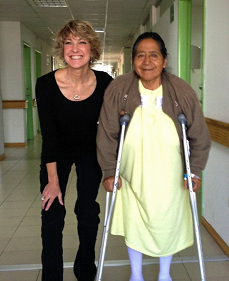
Lori Bryant, PT smiles with a patient

This trip was the first that Dr. Piedrahita coordinated on his own and he invited many colleagues from Tucson Orthopaedic Institute, including orthopaedic surgeon, Edward Petrow, Jr., DO, Laura Zimmerman, NP, and myself, Lori Bryant, PT. Zach Nandin, surgery technician at St. Mary’s Hospital, Sarah Gude, medical student, Jamison Trevino and Jordan Smith, from Stryker, also made the trip.

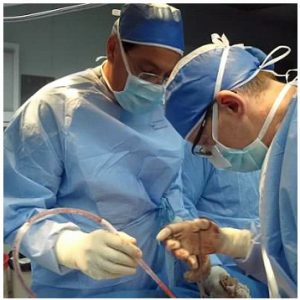
Luis Piedrahita, MD and Edward Petrow, DO performing surgery in Ecuador

Following a selection process, the team provided ten patients with knee replacements. All of the surgeries were performed in an operating room at Hospital Padre José Carollo. Stryker donated all of the implants, Tucson Medical Center donated much of the medical supplies, and OneStop Affordable Home Medical Equipment, a program of Jewish Family & Children Services of Southern Arizona, supplied all of the crutches.

Although the surgical conditions were very primitive and we had to improvise with limited supplies, the outcomes were extremely rewarding. The patients were incredibly grateful, breaking out in spontaneous applause when we arrived, and crying in gratitude after their surgeries for giving them the opportunity to walk once again.

 All of us that had the opportunity to go on this trip were given a chance to see what gratitude really looks like. These patients had so very little…no ice in the hospital, minimal pain control, and only one of the patients had his own cane.

Dr. Piedrahita hopes to repeat this trip on an annual basis, involving more people and providing a greater number of surgeries to those less fortunate living in our southern hemisphere.

I am honored and proud to work alongside my colleagues who donated their time and expertise to this extraordinary venture, and I encourage any of you who might be interested in visiting Ecuador to mark your calendars for the first week of November 2013. Hasta la vista!

Written by Lori Bryant, PT

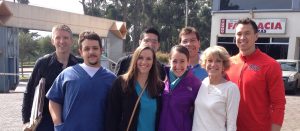
Front: Zach Nandin, Laura Zimmerman, NP, Sarah Gude, Lori Bryant, PT
Back: Edward Petrow, DO, Jamison Trevino, Luis Piedrahita, MD, Jordan Smith

Tucson Ortho Surgeon Offers Help to Local Patients in Need

Russell Cohen, MD, Tucson Orthopaedic Institute hip and knee surgeon, developed a program to provide free total joint replacement surgeries to local underserved patients with debilitating hip or knee arthritis.

This is the first program of its kind in Tucson and the idea came to Dr. Cohen because he has done similar programs in Vietnam and Haiti, with Operation Walk – a non-profit organization that sends volunteer surgeons to developing countries to perform joint replacements.

The first recipients of this program will take place September 29, 2012 – there will be six surgeries performed by Dr. Cohen, including two hip replacements and four knee replacements, and one of those will be performed by both Dr. Cohen and fellow Tucson Orthopaedic Institute surgeon, John Wild, Jr., MD.

Advancing Knee Surgery

Oro Valley Hospital is the first hospital in Southern Arizona to provide patients with a revolutionary surgeon-controlled robotic-assisted procedure for partial knee resurfacing.

The Rio Robotic Arm Interactive Orthopedic System allows surgeons to treat patient-specific knee conditions with a level of accuracy and precision not previously possible. Arizona now joins 35 states in the nation using MAKOplasty partial knee resurfacing technology.

For the patient, robotic surgery means nearly a third less time in the hospital and about half the recovery time.

According to the American Academy of Orthopedic Surgeons, knee replacement surgery has become one of the most successful of all joint replacement procedures in the country. The Agency for Healthcare Research & Quality reports that more than 600,000 knee surgeries are performed annually.

The knee is the largest joint in the body, located at the juncture of the femur, the tibia and patella. The femur and the tibia are connected by the anterior and posterior cruciate ligaments. During movement, the joint is cushioned by the meniscus, a tough cartilage material. The patella, or kneecap, is a small bone encased in tendons, that glides up and down in the groove on the top of the femur when the knee is flexed or extended. Where the femur meets the tibia, there is an inner (medial) and outer (lateral) compartment. The patella makes up the third compartment.

Previously, there was no way to repair a single compartment in the knee. When degeneration occurred, a total knee replacement was required.

With this new technology, surgeons can now conduct a minimally invasive procedure to remove early stages of osteoarthritis that have not yet reached all three compartments of the knee. Unlike other robotic systems, the Rio is controlled completely by the surgeon in the operating room, allowing for the greatest precision and saving as much of the knee and surrounding tissue as possible.

From a surgeon’s perspective, the robot provides for an increased level of accuracy,” said Dr. Kevin Bowers, an orthopedic surgeon who has performed nearly a half-dozen partial knee replacement procedures at Oro Valley Hospital. “The robot provides an element of control and an increased level of accuracy that is estimated at two to three times the traditional procedure. Getting that precise alignment can be the key to the longevity of the procedure. The robot’s biggest advantage is that level of accuracy.”

Bowers said he just saw his first patient at his two-week follow up and the patient came into the office without the use of any walking aids. “It’s doing what we expect it to be doing.”

Partial knee replacement procedures had been tried over the years, but with mixed and often disappointing results, Bowers said. “Partial knee replacement can be a little persnickety,” mostly because the ability to provide proper alignment among the three compartments, and to accurately remove degenerative tissue. About 10 years ago there was a revival in the interest in partial knee replacements as technological advances continue to drive research into ways of improving the ability to prolong joint and bone life, he said.

Partial knee resurfacing is not for everyone. Osteoarthritis must be in the early stages, and the procedure is not recommended for patients with inflammatory arthritis as that tends to extend to other parts of the body and caring for a joint at one source will unlikely solve the issue elsewhere.

There are two surgeons using the Rio system at Oro Valley Hospital – Dr. Bowers and Dr. James Benjamin. More orthopedic surgeons are seeking certification, but are not yet using the robot to perform surgeries on patients.

To find out if you are a candidate for this procedure, Oro Valley Hospital hosts free seminars.

To learn more, visit www.orovalleyhospital.com or call the seminar registration line at (866) 694-9355.

By Mary Minor Davis, September 15, 2012

Original source: https://biztucson.com

Advancing Knee Surgery

Oro Valley Hospital is the first hospital in Southern Arizona to provide patients with a revolutionary surgeon-controlled robotic-assisted procedure for partial knee resurfacing.

The Rio Robotic Arm Interactive Orthopedic System allows surgeons to treat patient-specific knee conditions with a level of accuracy and precision not previously possible. Arizona now joins 35 states in the nation using MAKOplasty partial knee resurfacing technology.

For the patient, robotic surgery means nearly a third less time in the hospital and about half the recovery time.

According to the American Academy of Orthopedic Surgeons, knee replacement surgery has become one of the most successful of all joint replacement procedures in the country. The Agency for Healthcare Research & Quality reports that more than 600,000 knee surgeries are performed annually.

The knee is the largest joint in the body, located at the juncture of the femur, the tibia and patella. The femur and the tibia are connected by the anterior and posterior cruciate ligaments. During movement, the joint is cushioned by the meniscus, a tough cartilage material. The patella, or kneecap, is a small bone encased in tendons, that glides up and down in the groove on the top of the femur when the knee is flexed or extended. Where the femur meets the tibia, there is an inner (medial) and outer (lateral) compartment. The patella makes up the third compartment.

Previously, there was no way to repair a single compartment in the knee. When degeneration occurred, a total knee replacement was required.

With this new technology, surgeons can now conduct a minimally invasive procedure to remove early stages of osteoarthritis that have not yet reached all three compartments of the knee. Unlike other robotic systems, the Rio is controlled completely by the surgeon in the operating room, allowing for the greatest precision and saving as much of the knee and surrounding tissue as possible.

From a surgeon’s perspective, the robot provides for an increased level of accuracy,” said Dr. Kevin Bowers, an orthopedic surgeon who has performed nearly a half-dozen partial knee replacement procedures at Oro Valley Hospital. “The robot provides an element of control and an increased level of accuracy that is estimated at two to three times the traditional procedure. Getting that precise alignment can be the key to the longevity of the procedure. The robot’s biggest advantage is that level of accuracy.”

Bowers said he just saw his first patient at his two-week follow up and the patient came into the office without the use of any walking aids. “It’s doing what we expect it to be doing.”

Partial knee replacement procedures had been tried over the years, but with mixed and often disappointing results, Bowers said. “Partial knee replacement can be a little persnickety,” mostly because the ability to provide proper alignment among the three compartments, and to accurately remove degenerative tissue. About 10 years ago there was a revival in the interest in partial knee replacements as technological advances continue to drive research into ways of improving the ability to prolong joint and bone life, he said.

Partial knee resurfacing is not for everyone. Osteoarthritis must be in the early stages, and the procedure is not recommended for patients with inflammatory arthritis as that tends to extend to other parts of the body and caring for a joint at one source will unlikely solve the issue elsewhere.

There are two surgeons using the Rio system at Oro Valley Hospital – Dr. Bowers and Dr. James Benjamin. More orthopedic surgeons are seeking certification, but are not yet using the robot to perform surgeries on patients.

To find out if you are a candidate for this procedure, Oro Valley Hospital hosts free seminars.

To learn more, visit www.orovalleyhospital.com or call the seminar registration line at (866) 694-9355.

By Mary Minor Davis, September 15, 2012

Original source: https://biztucson.com

Something More: Osteoarthritis

Most of us know better than to drain the oil from our car and let the motor run. The heat from the friction would soon cause it to seize, destroying it in minutes.

Osteoarthritis, the most common form of arthritis, is another example of what happens when protection against friction is removed. It occurs when the cartilage, the smooth tissue covering the ends of bones where they meet at our joints, breaks down and wears away. The bones rub together, causing pain, swelling, and stiffness. Bone spurs develop, permanently changing the joint’s shape.

The result, as the approximately 27 million Americans who are afflicted with osteoarthritis know too well, is painful and even crippling.

Osteoarthritis is incurable, and no cure is expected in the foreseeable future. Still, advances in medical technology and research have made inroads both in treatment and prevention.

While osteoarthritis is simply wear and tear on joints, genetics and lifestyle are factors in predicting who may experience osteoarthritis. Trauma to joints from sports and occupations can break down cartilage.

An Ounce of Prevention

People who want to minimize or delay onset of osteoarthritis can take steps, advises Edward P. Petrow, Jr., DO, a physician with the Tucson Orthopaedic Institute.

“The most important thing you can do is lead an active lifestyle,” he says. “The saying that a rolling stone gathers no moss applies to our bodies. We peak around age 25 and are in a state of decline from then on. The only thing that seems to slow that down is diet and exercise.”

The onset of osteoarthritis doesn’t mean activity should end, he notes, but it might require switching gears. Giving up exercise can make it worse.

“People with arthritis sometimes have to change gears,” Petrow says. “They may switch from running to cycling or swimming.”

Runners may feel they are losing exercise benefits, for example, if they switch to walking, but walking burns the same amount of calories per mile covered as running. It takes longer to cover the distance, but walking also can be more enjoyable.

It’s important to choose an alternative you enjoy, he adds.

“I ask people, ‘What do you love to do?'” he says. “If you love to run and I tell you to swim and you hate to swim you’re not going to do it. Find an activity that you can modify to fit your lifestyle.

“I think Tai Chi is fantastic,” Petrow continues. “I encourage our patients to practice it, more for balance and proprioception. Balance is like muscle: you can train and improve it.

Better balance and muscle tone help prevent falls, and can decrease pressure on joints.

“Every little bit helps,” he says, but people should not expect total relief.

“Muscles are shock absorbers and exercise can help,” he says, “but when you have bone on bone, it doesn’t matter how much muscle tone you have.”

As with most medical conditions, a healthy diet is important in minimizing damage to joint, and that’s a lot less complicated than some people may realize. Expensive supplements, for example, are likely to be a waste of money.

“A lot of the information about supplements is voodoo,” Petrow says. “Keeping a healthy body weight will by far help your joints more. Every extra pound of body weight exerts three to four pounds of force on you knee joints, every step, every day.

“Calories are just a number, and you need to look at how to deduce them,” he adds. “It’s simple math.”

Fad diets and supplements come and go, he notes, and some might do actual harm.

“Study results are published in a vacuum, and often the media grabs one tidbit and it becomes the new in thing to do,” he says, adding that mainstream media can play a role in popularizing unproven diets and supplements.

Not Your Grandmother’s Joint Replacement

People contemplating joint replacement may be reluctant to consider it because of past experiences by friends and relatives. They may want to take another look; a lot has changed, even in the past 10 years.

“The marriage of techniques and technology has helped orthopedics deliver a better lifestyle,” says Petrow.

People who were advised to delay replacement because the joints wear out now can expect them to last 20-25 years. And the surgery techniques have improved significantly. The practice of “banking blood ahead of time for transfusions during surgery is no longer needed, for example, and the hospital stay has decreased from three weeks to a few days. 

“We are delivering joints through smaller incisions, which are less invasive,” Petrow said. “When you combine that with improved technology we’re entering a golden age of what we are able to do.”

“The nuts and bolts are the same,” he continues. “We have better instrumentation to make more accurate incisions, and we’ve improved our techniques.”

Surgeons now do hip replacement through the front, which reduces the amount of muscle to cut, making recovery faster.

Technology and improved methods help, but Petrow says the skill and experience of the surgeon remain the most critical considerations for people seeking joint replacement.

Drug Therapies: Relief, but at a Cost

Medication can relieve the pain, but Petrow urges caution in using drugs to treat arthritis.

“I remember a pharmacology professor telling us that all medicines are poison, and we should try to avoid taking poisons,” he says. “Nutritional therapies like glucosamine and injectibles will not bring back what’s gone; they just treat the symptoms, and they come with a price.”

Sometimes the price can be higher than people realize.

“Celebrex was a popular arthritis prescription drug, then we learned about heart disease and stroke issues,” Petrow says, adding that with medications, “less is better, so use them only when you need to.”

At some point, Petrow says, science will allow doctors to harvest cartilage out of a joint, grow it in a laboratory and transplant it to a patient, but as of now such procedures are just a dream.

“Growing and transplanting cartilage is the Holy Grail in orthopedics right now,” he says. But it’s a long way off.”

Osteoarthritis is incurable, but incurable does not mean hopeless. People with osteoarthritis have a variety of treatment options, and going over them with a physician could minimize the impact on their enjoyment of life.

“If you have pain in your joint that limits your lifestyle, you should talk to someone about it,” Petrow advises. “People may think they are too old or too young to undergo treatment for arthritis, but you’re never too old or too young to enjoy your life, and you only get one.

Don’t assume that what was true for a friend or relative 10 or 20 years ago applies today.

“A lot of misconceptions have lingered from the earlier days of orthopedic surgery,” he says. “Motion is life. If you can’t enjoy your life, sit down and talk to someone about it – no matter what your age is.”

Written by Mark Flint

As published in Tucson Osteopathic Medical Foundation publication, “Something More for You, the Osteopathic Patient”, Vol. 14, Issue 1, 2012

Exhaust Options Before Joint Replacement Surgery

Non-steroidal anti-inflammatory drugs (NSAIDs) acetaminophen, glucosomine and chondroitin nutritional supplements, cortisone injections and rooster cartilage – yes, rooster cartilage – may help avoid the need for hip and knee joint replacement surgery.

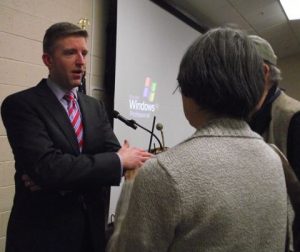
About 65 people came to the East Social Center on Thursday to hear Dr. Edward Petrow, a surgeon at the Tucson Orthopaedic Institute, talk about remedies for stiff and weak joints before considering joint replacement surgery.

Dr. Edward Petrow speaks to members of the audience after his talk.

Petrow explained that osteoarthritis is the wearing down of articular cartilage of the joints and begins at 25. As one ages, symptoms of the wearing down may result in joint soreness, stiffness and pain caused by weakening of the muscles surrounding the joint due to inactivity.

Acetaminophen doesn’t decrease or reduce inflammation, but will reduce pain, he said.

Glucosomine and chrondroitin, a food supplement not regulated by the Food and Drug Administration, doesn’t work for everyone and usually takes three months to determine whether it is effective.

Cortisone injections can reduce swelling and discomfort, and if effective may be repeated every three months.

Hyaluronic acid injections, which comes from the cartilage of rooster combs, is said to restore lubrication and fluid in joints and can last six to 12 months.

Weight loss can affect joints in a positive way.

“Lose one pound and it reduces three to four pounds of pressure on your knees,” Petrow said.

If All Else Fails

Though he advises trying non-surgical remedies first, Petrow said the time to consider joint replacement is when there is loss of function.

About 500,000 hip replacement surgeries are done annually in the U.S. Though knee replacement is the gold standard of care, minimally invasive knee surgery will result in less trauma, less bleeding and pain and a smaller scar,

Exhaust all non-surgical options. Minimally invasive technology reduces complications, Petrow advised.

New advances include computer-assisted surgery where a computer makes a model of a patient’s hip or leg, and intra-operative imaging is now available for more accurate leg length with hip replacement surgery.

For an appointment with Petrow, call the Tucson Orthopedic Institute at (520) 382-8200.

Written by Ellen Sussman, Special to the Green Valley News

As published in the Green Valley News, Wednesday, December 21, 2011

Treating Arthritis: Making Gains Against The Pain

Although there are 100 types of arthritis, and many forms of treatment, research is getting us close to significant improvements in care. Here are some of the local developments that offer hope.

Arthritis is America’s number one cause of disability, costing the U.S. economy more than $128 billion a year, according to the Arthritis Foundation. The organization’s Southern Arizona Chapter reports that in Arizona alone, approximately 1.1 million people have some form of the disease. Six thousand of those are children.

Considering how prevalent the disease is, there’s still much research, education and drug testing to be done. Arthritis is complicated – it has 100 different forms, including many autoimmune disorders; it can be difficult to diagnose; and despite the number of drugs on the market, there’s no single treatment that works for everyone.

“Arthritis is a Greek word meaning ‘swelling of the joint,'” says Susan Sweeney, executive director of the Arthritis Foundation’s Greater Southwest Chapter. “Osteoarthritis (OA) is the number one disease in our group; rheumatoid arthritis (RA) is second. Then there’s lupus, which can be of the skin or different kinds; fibromyalgia; or psoriatic arthritis,” the type PGA player Phil Mickelson was diagnosed with in 2010. Autoimmune forms of arthritis have very different causes than OA, but they generally all create joint pain.

Two local medical groups are aggressively pursuing advancements in the field of arthritis, with cutting-edge research being conducted at the Arizona Arthritis Center and innovative patient treatments being done at Tucson Orthopaedic Institute (TOI).

Located on the University of Arizona College of Medicine campus, the Arizona Arthritis Center is headed by Eric Gall, MD, the center’s founder and current interim director.
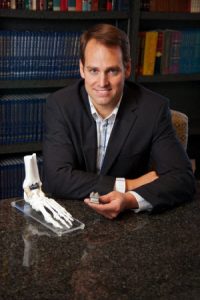
He says the main focus at the center is immunology and inflammation. A current study, led by John Szivek, MD, is exploring a new treatment for OA patients. “Dr. Szivek worked with artificial joints early on. Now he’s studying re-growth of cartilage in damaged joints using non-controversial stem cells,” Dr. Gall explains. “They’re taken from the fat of the abdomen, he grows them and reintroduces them to grow into new cartilage. This is a new approach in this area. His lab is waiting to be FDA approved to do the study in humans.”

Other research underway at the center includes investigating how to control lupus, clinical studies on pharmaceuticals and a look at valley fever in arthritis patients who are on biologic agents. “Fungal infections can come out in these patients,” and they must go off the drugs, Dr. Gall says. In the past, there’s been uncertainty about whether the patients could continue treatment after valley fever symptoms dissipated. “We’re asking, can you treat again after going off the drug?”

Physicians at Tucson Orthopaedic Institute are attracting attention for three progressive procedures that help those with deteriorating joints. Eric Anctil, MD is performing the Scandinavian Total Ankle Replacement (STAR) surgery, which results in greater range of motion than what’s achieved with other options.

The STAR device, states Dr. Anctil, “is the only implant that’s mobile bearing.” Other ankle replacement devices are fixed bearing and therefore limit motion, as does ankle fusion. The procedure was developed by a Danish surgeon and has been commonplace in Europe and Canada for 15 to 20 years. The Food and Drug Administration approved the technique in the U.S. two years ago.

Anctil moved to Tucson from Canada, where he’d been performing the surgery for years. “When I first came here, I didn’t use another replacement; I waited for the FDA approval. I was the first one in Arizona to do it. Now there are one or two doctors who do the procedure in Tucson and some in Phoenix,” he says.
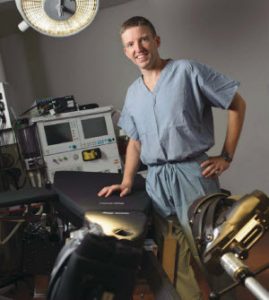
Those who have put off hip replacement surgery in anticipation of something less invasive now have another option, currently being performed by Edward Petrow Jr., DO. “With anterior hip replacement (AHR), instead of cutting muscle to get to the hip joint, we move the muscle to the side from the front. It’s a quicker initial recovery and patients are off the cane or walker in the first week or two. Other advantages are that there are no hip precautions and a much lower risk for hip dislocation.” The incision, he says, is 8-10 centimeters.

Using real time X-ray makes the surgery more precise. “We use the opposite hip as a template to match leg length,” an issue which occasionally arises with other hip replacement techniques, Dr. Petrow notes. AHR is done on a special surgical table that allows extension of the patient’s leg downward, thus giving front access to the hip.

Like Dr. Anctil, Dr. Petrow moved to Tucson from an area where the surgery already was being performed. “I came from Virginia and did it there. I was surprised more people weren’t doing it here.” Dr. Petrow’s primary obstacle was convincing Hospital administrators to purchase the special table at a cost of $70,000 to $120,000, which they eventually did.
The surgery also requires special training. After performing approximately 40 AHR surgeries during his last year in Virginia and a dozen here, Dr. Petrow believes he’s the most experienced AHR doctor in Tucson. “It’s now sweeping the country,” he adds.

Just approved by the FDA is an innovative procedure for improving ee s, one that uses vitamin E to extend the life of the device. When this article was written, Scott Slagis, MD was the only Tucson doctor lined up to perform the surgery, which will begin once the implants are shipped. He explains that plastics in joint replacements are generally radiated during manufacturing to make them more durable. But radiation releases free radicals into the plastic, which can lead to oxidation and subsequent wear.

“You add vitamin E, which is an antioxidant, and it neutralizes the free radicals. It then may last longer and be stronger,” Dr. Slagis reports. He says the procedure is not age restricted, but it’s especially good for younger, active patients because of its longevity.

Dr. Slagis has seen small advancements in knee replacement procedures, which he’s been performing for 20 years. But he believes the vitamin E implant could prove to be significant. “This is one that may have profound implications,” he says.

Children With Arthritis

Although support programs abound for kids with arthritis, medical attention can be harder to come by, with a shortage of doctors nationwide.

“There are no board-certified pediatric rheumatologists in Southern Arizona, states Deborah Jane Power, DO, of Catalina Pointe Arthritis and Rheumatology Specialists, P.C. “I’m the only rheumatologist in Southern Arizona willing to see kids with juvenile arthritis 15 and younger.” She and her partners also treat adults with RA and OA.

Power explains the differences between the two: “Osteoarthritis is a degenerative, wear-and-tear condition. Some is genetic, some caused by obesity or trauma and bad injuries, such as sports related. The distribution in the body is knees and hips, the base of the thumb and the joint closest to the fingernail.” While she said there are no drugs that slow the progression of OA, taking anti-inflammatory drugs can help, as can exercise.

“Rheumatoid arthritis is an autoimmune disease that starts in the joint. The body attacks the joint lining in the synovial capsule.This causes swelling, pain and loss of range of motion. It’s whole-body inflammation.You also can have fatigue and a low-grade fever,” Power notes.

Nutrition plays a part in arthritis, as well, she says. “Dr. Andrew Weil believes dairy is inflammatory. Things like turmeric, garlic, cayenne and green tea help with inflammation, so patients can be given that. Foods in the nightshade family cause inflammation — tomatoes, potatoes and eggplant.” She suggests that people with RA and other autoimmune diseases avoid gluten, as it can stimulate the immune system.

Arthritis Foundation – Greater Southwest Chapter

The foundation’s primary goals, notes Executive Director Susan Sweeney, are to increase awareness of the disease, raise funds for research and provide local support for people with arthritis. “Money raised in Tucson stays to provide programs and services in Southern Arizona,” she says. These include seminars, health fairs, exercise classes, educational material, referrals, scholarships and kids’ camps — all coordinated out of the Arthritis Foundation’s office at 310 S. Williams Boulevard.

“We have community education classes where a physician and I go out to senior centers, senior communities or to the work place. One big thing we do is arthritis exercise classes. Water exercise and Tai Chi are especially good choices for arthritis patients. We train instructors and have partnerships with Tucson Parks & Recreation, for example.”

Often, it can take eight weeks to see a rheumatologist, according to Sweeney, and people want information on the disease while they wait. “We send them support group information, Arthritis Today magazine and a drug guide from the national office.” Her staff can refer callers to one of eight rheumatology groups in town.

Major fundraising events for the foundation include the Arthritis Walk, held each spring; the Jingle Bell 5K Run & Fun Walk in December; and a newcomer last year, the Surgeons vs. Chefs Pumpkin Carving Contest.

Chris Stead, local Arthritis Walk coordinator, reported that this year’s event drew more than 500 participants and raised approximately $40,000 through pledges, donations and sponsorships. Held at Brandi Fenton Memorial Park on May 7, 2011, the one-mile walk was kicked off by Mayor Bob Walkup, followed by entertainment and activities.

“We had community vendors and booths like Sam’s Club, Desert Diamond Casino and orthopaedic teams,” notes Stead. Ronald McDonald performed magic tricks for the kids, a disc jockey played music and a splash pad cooled everyone Down. “There was a dogathon, and K-9 Loyal Companions gave doggie massages. Dogs get arthritis, too,” Stead remarks.

This year’s holiday-themed 5K fundraiser is slated for Dec. 3 at Reid Park, he says.“It’s a timed run, people dress in holiday gear and we give awards. There’s also a contest with dogs; you can dress up your pet. Funds help with juvenile arthritis family camps and other programs.”

The foundation holds three camps each year: Camp Cruz, a week-long summer camp for 11 to 16 year olds in New Mexico; an overnight camp for younger kids; and a family camp held locally.

As published in Tucson Lifestyle Magazine, December 2011

Written by Christy Krueger

Prickett on Becker’s List of 65 Outstanding Shoulder Surgeons and Specialists

Chicago – Becker’s Orthopedic, Spine & Pain Management Review is pleased to announce the inclusion of Dr. William Prickett on its list: “65 Outstanding Shoulder Surgeons and Specialists”. The physicians on this list were selected based on their expertise in shoulder surgery, leadership positions, excellent research and reputation among other shoulder specialists. The editorial team publicly solicited recommendations for this list and chose additional physicians through extensive internal research. Physicians do not pay and cannot pay for inclusion on this list.

William D. Prickett, MD (Tucson Orthopaedic Institute)

Dr. Prickett has clinical and research interests in sports medicine and shoulder surgery. He has authored several articles on topics such as shoulder instability in athletes. Dr. Prickett earned his medical degree at Emory University School of Medicine in Atlanta and completed his orthopedic surgery residency at Washington University Medical Center in St. Louis. His additional training includes a sports medicine and shoulder service fellowship at the Hospital for Special Surgery in New York City. He has also spent time working with the New York Giants. During his career, he has given several presentations at professional meetings of the American Academy of Orthopaedic Surgeons and American Shoulder and Elbow Surgeons.

The Becker’s editorial team devised the list after extensive research and public solicitation for outstanding candidates. The list was also vetted through shoulder specialists from around the country before finalization. Members of the list are often leaders of their groups, winners of prestigious research awards and team physicians for professional athletes. Each member of the list underwent rigorous review before inclusion as an outstanding specialist in the field of shoulder surgery.

We congratulate each physician selected for inclusion on this list. If you would like to learn more about this list or future lists slated for publication in Becker’s Orthopedic, Spine & Pain Management Review, please contact assistant editor Laura Miller at laura@beckersasc.com.

Becker’s Orthopedic, Spine & Pain Management Review is an online and print publication with a target audience of physicians, group leaders and industry experts. The online publication receives more than 147,000 pageviews per month and the print publication circulates four times per year. The publication also sends out free electronic newsletters twice weekly.

Zeiller Receives NMC’s Perioperative Physician of the Month Award

The OR staff at Northwest Medical Center presented the August 2011 Perioperative Physician of the Month Award to Dr. Steven Zeiller because of his commitment to NMC’s values. Here is what they said:

Teamwork: Dr. Zeiller continually communicates his needs with all arenas in the perioperative team. He is consistently on time, which is greatly appreciated.

Excellence: Dr. Zeiller is very methodical and conscientious in the operating room. His patients’ outcomes are excellent.

Safety: Dr. Zeiller takes an active role in the positioning of his patients and is readily available for questions post procedure.

Integrity: Dr. Zeiller always has his orders clear and is very efficient with his paperwork. He has an impeccable rapport with not only the perioperative staff, but with other physicians as well.

Service: Dr. Zeiller brings an active spine practice to NMC and treats everyone with respect. His humor truly lightens up our days in the operating room, and his enthusiasm is contagious.

Humanity: Dr. Zeiller is one of our favorite surgeons who no one has a bad thing to say about. He is warm and giving, and his selection for this award has been late in coming.

Congratulations Dr. Zeiller. You are truly deserving of this award!

Anterior Hip Replacements Are the Future: 5 Points from Dr. Edward Petrow

A growing number of joint replacement surgeons are beginning to perform hip replacement surgery using an anterior approach instead of the traditional posterior approach because of the benefits it has for the patient as well as the provider. It can be safely performed on many patients, as long as they have a low risk of fracture and normal anatomy.

Edward Petrow Jr., DO, an orthopedic surgeon at Tucson Orthopaedic Institute, discusses five points on performing anterior hip replacements and what it can mean for the future.

1. Difference in surgical technique. The traditional approach to hip replacement surgery is going through the back, splitting the buttock muscles and peeling back the hip muscles to access the joint. When surgeons employ the anterior approach to hip replacement surgery, they enter the hip through the front part of the joint. “When we take the anterior approach, we don’t detach or remove any muscles,” Dr. Petrow says. “From a recovery standpoint, that means less pain and quicker return to function.”

The anterior approach is a minimally invasive surgery because you can perform the whole procedure through a 10 centimeter or less incision. When surgeons eliminate the muscle disruption, patients don’t have to go on hip precaution, as other hip replacement patients do, and they can return to regular activity quicker.

2. Imaging technology allows for greater precision. In addition to providing a quicker recovery, the anterior approach can also allow surgeons to more precisely place the implant because they can use real-time X-ray guidance perioperatively. “With this equipment, you are watching the procedure on X-ray as you go in so you can see where the implant is going and get it exactly where you want it,” says Dr. Petrow. “This gives you better control of their leg length.”

Experienced surgeons know how to closely reproduce the patient’s leg length, but with the real time X-ray, they can measure both sides to make sure they are the same length. There have been many cases of hip replacement failures due to leg lengthening issues, but with the minimally invasive anterior approach those complications become nearly extinct.

3. Why the procedure isn’t more widespread. While the anterior approach may be less invasive and associated with fewer complications, surgeons without extra training in the technique will not be able to perform in a safe and effective manner. “You have to be committed to doing some extra training to be able to perform it safely,” says Dr. Petrow. “The other issue is that you have to have specialized table to allow you to get to the hip from the front. The hospital has to be committed to getting the table and the surgeon has to commit to the extra training, but it’s a better treatment.”

It’s often hard for surgeons to stay abreast of the most recent treatments and techniques, but it can be worthwhile. The anterior approach may be different, but surgeons can still use the same instrumentation they’ve always used during the surgery. “Just because you’ve done hip replacement surgery the same way over your career doesn’t mean you can’t change,” he says. “Some surgeons won’t and that’s fine, because the posterior approach can still provide a good outcome.”

4. Hospitals benefit from the technique as well. From his perspective, Dr. Petrow says the extra time and financial investment in the anterior approach is worthwhile because he hasn’t experienced any complications, nerve problems or dislocations from patients undergoing anterior hip replacements. It’s also been his experience that these patients are up walking faster, off pain medication sooner and discharged from the hospital sooner.

“We’ve experienced a whole day decrease in the length of stay, from three days to two,” says Dr. Petrow. “All the way around, the short-term recovery has been quicker and there haven’t been any complications.”

5. Anterior hip replacements are the way of the future. As patients find out more about the advantages associated with anterior hip replacements, they will demand that type of procedure and drive it forward, says Dr. Petrow. The technology developed in the past few years has made it an easier and more accessible procedure for surgeons to perform. However, in the future he doesn’t see the procedure becoming much less invasive than it is now, which means further innovation will come from implant design and placement.

“You don’t want to sacrifice good results, and there needs to be a balance between minimally invasive techniques and achieving durable, reproducible results with implants,” he says. “I know the implants I use are durable and I can see patients have a good outcome. It’s the next step forward in what we do as far as hip replacement surgery.”

Written by Laura Dyrda

As published in Becker’s Spine Review, Tuesday, July 26, 2011

Is Your Child’s Backpack Weighing Them Down?

TUCSON – For parents, school always brings up health concerns: how to keep your kids away from germs, how to keep them eating healthy, and how to make sure they get enough sleep.

Something parents may not think about is how to keep their children’s backs safe from harm.

Dr. Brian Nielsen, a local pediatric orthopedist, says your kid’s backpack should not weigh more than 15 percent over the weight of your child. He says too much weight on their shoulders can leave them with irreversible back damage.

“If you have a heavy backpack and you’re leaning back, you can develop a little stress fracture at the lower back and those don’t usually heal,” he said.

New sixth grader Mackenzie Sanders is already feeling the pain.

“It hurts around the shoulders and sometimes I’m kind of hunching over because of the weight,” she said. Her concerned mom does not have any answers.

“I really have no choice. She’s got to have all of her books and supplies,” she said.

However, doctors say there are some things parents can do to help.

Make sure your kids backpacks have wide, padded straps and that they carry it on both shoulders. Fitness level is also a factor that can make a difference.

“The more fit the child is, the better the posture is, the more flexible they are, the less they’re going to have problems,” Dr. Nielsen said.

Another thing to keep in mind is your family history. If your family members have back issues, your child may be more prone to having them as well. See a specialist if their pain persists for more than a couple of weeks or spreads to other parts of their body.

As appeared on KVOA Channel 4 News on November 10, 2010

Related Document: Is Your Backback Safe? 3 Steps to Safe Backback Use

Orthopaedic Surgeon Takes a Look at the ‘Hip Side of Things’

“So what’s new on the hip side of things?” Dr. Edward P. Petrow Jr., asked a room full of people at the Quality Inn Wednesday afternoon. And no, Petrow wasn’t asking about the most à la mode musical beats or in vogue fashion trends. When Petrow, the orthopaedic surgeon and recent Virginia transplant, asked about the “hip side of things” he really was asking about, well, the hips.

Petrow, the sixth Tucson-area guest speaker invited to Nogales by the Mariposa Community Health Center, specializes in joint replacements, specifically knee and hip replacements. Norma Villaseñor, a spokeswoman for Mariposa, said the clinic started holding the biannual luncheons thee years ago as part of the “Mariposa Series.” Some 30 people, both local health professionals and other community members, filed into a room at the Quality Inn around noon, ate lunch and then listened to what Petrow described as “what’s cooking in what we do.”

Villaseñor, who said the list of past speakers included a neurosurgeon and a cancer treatment specialist, said, “We want to invite them to learn about the latest innovations and intermingle and network.”

Major Changes

Petrow said joint replacement surgery has changed noticeably since he finished residency eight years ago. He now works for Tucson Orthopaedic Institute. Petrow said two big changes in hip and knee replacement surgery are the size of surgery incisions and the lifetime of the replacements. Thanks to new computer-assisted surgery techniques, the size of incisions has shrunk noticeably to around 10 centimeters, he said. And because of innovations in plastic, metal and ceramic, implants can now last up to 25 years. They used to max out around 10 years, he said. “Don’t be scared of implants, longevity is a lot better,” Petrow said.

Despite the innovations, he reminded the audience of the dangers that always accompany surgery. For example, with the metal-on-metal implants there is a very slight risk that metal debris could form a pseudo-tumor.

Because of the longer lifespan and soaring levels of obesity, the number of hip and knee replacements per year in America, currently resting around 500,000, continually increases, Petrow said. Since many people live to 100 now, if they have bad knees by age 50, they’ll probably get surgery, instead of spending the second half of their life in pain, Petrow explained.

And, extra weight equates to a disproportionate addition of joint pressure, he said. “Lose 10 pounds and that’s like taking 30 pounds of pressure off the knees with every step,” Petrow said.

Need to Educate

Judge James Soto, who is on the local hospital board, attended the event and invited his friend and former college roommate SCVUSD Superintendent Dan Fontes, because he said he knew he had bad knees. After Petrow finished his Powerpoint presentation, Fontes, who said he’d “heard all of this before” but was “still deciding” whether or not to get surgery, asked him a question.

Fontes wanted to know the risks associated with post-surgery infection, asking specifically about taking preventative medicine before dentist visits. Petrow said he tells his patients to “take antibiotics for forever. Your goal is to never have an infection.”

Soon before the audience members shuffled out and on with their day, Petrow encouraged doctors in the audience to keep their patients up-to-date – or shall we say, hip – on all procedures. “We’re the guys putting scars on people. We need to educate them,” Petrow said.

By Marisa Gerber

As published in Nogales International, Monday, August 16, 2010

1 2 3

Search

+