Physician Highlight: Meet Dr. Edward Petrow!

Meet one of Tucson Orthopaedic Institute’s excellent Total Joint Replacement surgeons, Dr. Edward Petrow! When he is not in the gym working out or boxing, he focuses on helping patients improve their quality of life. Dr. Petrow has been with TOI for nine years and is bringing some of the newest and most advanced technology to the game: the MAKO® Robot. Dr. Petrow is going into his second year using the MAKO® when performing total hip, partial knee, and total knee replacement surgery.

With a smile, he describes orthopaedic surgery as “glorified carpentry.” Rods and blocks were the previous tools to use when performing this type of surgery. Today it has evolved into the use of lasers and robotics to measure and build with much higher accuracy.  The way Dr. Petrow describes and talks about the use of this technology shows his true passion for orthopaedics; this passion led him to become the first physician in Southern Arizona to perform a robotic anterior hip replacement. This type of hip replacement has the surgeon approaching from the front instead of the side or back. This approach allows the surgery to be done through a smaller incision which summits to less pain, less muscle trauma, a shorter hospital stay, and an easier and shorter recovery.

When asked why Dr. Petrow enjoys being an orthopaedic surgeon, he could not form the exact reason into words. “It’s like asking someone why your favorite color is your favorite color,” he joked. Aside from being a Racecar Driver, or a Rock Star, he cannot see himself doing anything else; he truly enjoys helping patients and finds total gratification in helping them get back to activities they might not have enjoyed in years!

To learn more about Dr. Petrow and the MAKO® Robot, please visit: http://tucson-old.levoengage.com/doctors/edward-p-petrow-jr-do-hip-knee-surgeon/ 

Treating Arthritis: Making Gains Against The Pain

Although there are 100 types of arthritis, and many forms of treatment, research is getting us close to significant improvements in care. Here are some of the local developments that offer hope.

Arthritis is America’s number one cause of disability, costing the U.S. economy more than $128 billion a year, according to the Arthritis Foundation. The organization’s Southern Arizona Chapter reports that in Arizona alone, approximately 1.1 million people have some form of the disease. Six thousand of those are children.

Considering how prevalent the disease is, there’s still much research, education and drug testing to be done. Arthritis is complicated – it has 100 different forms, including many autoimmune disorders; it can be difficult to diagnose; and despite the number of drugs on the market, there’s no single treatment that works for everyone.

“Arthritis is a Greek word meaning ‘swelling of the joint,'” says Susan Sweeney, executive director of the Arthritis Foundation’s Greater Southwest Chapter. “Osteoarthritis (OA) is the number one disease in our group; rheumatoid arthritis (RA) is second. Then there’s lupus, which can be of the skin or different kinds; fibromyalgia; or psoriatic arthritis,” the type PGA player Phil Mickelson was diagnosed with in 2010. Autoimmune forms of arthritis have very different causes than OA, but they generally all create joint pain.

Two local medical groups are aggressively pursuing advancements in the field of arthritis, with cutting-edge research being conducted at the Arizona Arthritis Center and innovative patient treatments being done at Tucson Orthopaedic Institute (TOI).

Located on the University of Arizona College of Medicine campus, the Arizona Arthritis Center is headed by Eric Gall, MD, the center’s founder and current interim director.
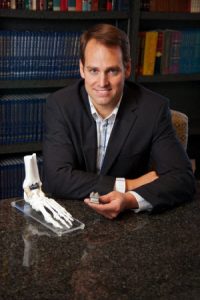
He says the main focus at the center is immunology and inflammation. A current study, led by John Szivek, MD, is exploring a new treatment for OA patients. “Dr. Szivek worked with artificial joints early on. Now he’s studying re-growth of cartilage in damaged joints using non-controversial stem cells,” Dr. Gall explains. “They’re taken from the fat of the abdomen, he grows them and reintroduces them to grow into new cartilage. This is a new approach in this area. His lab is waiting to be FDA approved to do the study in humans.”

Other research underway at the center includes investigating how to control lupus, clinical studies on pharmaceuticals and a look at valley fever in arthritis patients who are on biologic agents. “Fungal infections can come out in these patients,” and they must go off the drugs, Dr. Gall says. In the past, there’s been uncertainty about whether the patients could continue treatment after valley fever symptoms dissipated. “We’re asking, can you treat again after going off the drug?”

Physicians at Tucson Orthopaedic Institute are attracting attention for three progressive procedures that help those with deteriorating joints. Eric Anctil, MD is performing the Scandinavian Total Ankle Replacement (STAR) surgery, which results in greater range of motion than what’s achieved with other options.

The STAR device, states Dr. Anctil, “is the only implant that’s mobile bearing.” Other ankle replacement devices are fixed bearing and therefore limit motion, as does ankle fusion. The procedure was developed by a Danish surgeon and has been commonplace in Europe and Canada for 15 to 20 years. The Food and Drug Administration approved the technique in the U.S. two years ago.

Anctil moved to Tucson from Canada, where he’d been performing the surgery for years. “When I first came here, I didn’t use another replacement; I waited for the FDA approval. I was the first one in Arizona to do it. Now there are one or two doctors who do the procedure in Tucson and some in Phoenix,” he says.
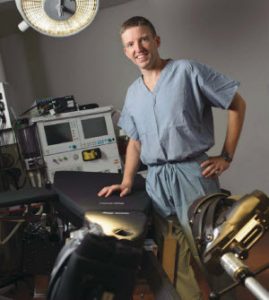
Those who have put off hip replacement surgery in anticipation of something less invasive now have another option, currently being performed by Edward Petrow Jr., DO. “With anterior hip replacement (AHR), instead of cutting muscle to get to the hip joint, we move the muscle to the side from the front. It’s a quicker initial recovery and patients are off the cane or walker in the first week or two. Other advantages are that there are no hip precautions and a much lower risk for hip dislocation.” The incision, he says, is 8-10 centimeters.

Using real time X-ray makes the surgery more precise. “We use the opposite hip as a template to match leg length,” an issue which occasionally arises with other hip replacement techniques, Dr. Petrow notes. AHR is done on a special surgical table that allows extension of the patient’s leg downward, thus giving front access to the hip.

Like Dr. Anctil, Dr. Petrow moved to Tucson from an area where the surgery already was being performed. “I came from Virginia and did it there. I was surprised more people weren’t doing it here.” Dr. Petrow’s primary obstacle was convincing Hospital administrators to purchase the special table at a cost of $70,000 to $120,000, which they eventually did.
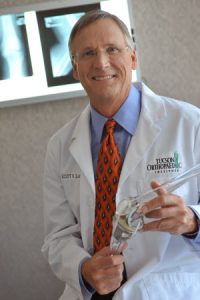
The surgery also requires special training. After performing approximately 40 AHR surgeries during his last year in Virginia and a dozen here, Dr. Petrow believes he’s the most experienced AHR doctor in Tucson. “It’s now sweeping the country,” he adds.

Just approved by the FDA is an innovative procedure for improving ee s, one that uses vitamin E to extend the life of the device. When this article was written, Scott Slagis, MD was the only Tucson doctor lined up to perform the surgery, which will begin once the implants are shipped. He explains that plastics in joint replacements are generally radiated during manufacturing to make them more durable. But radiation releases free radicals into the plastic, which can lead to oxidation and subsequent wear.

“You add vitamin E, which is an antioxidant, and it neutralizes the free radicals. It then may last longer and be stronger,” Dr. Slagis reports. He says the procedure is not age restricted, but it’s especially good for younger, active patients because of its longevity.

Dr. Slagis has seen small advancements in knee replacement procedures, which he’s been performing for 20 years. But he believes the vitamin E implant could prove to be significant. “This is one that may have profound implications,” he says.

Children With Arthritis

Although support programs abound for kids with arthritis, medical attention can be harder to come by, with a shortage of doctors nationwide.

“There are no board-certified pediatric rheumatologists in Southern Arizona, states Deborah Jane Power, DO, of Catalina Pointe Arthritis and Rheumatology Specialists, P.C. “I’m the only rheumatologist in Southern Arizona willing to see kids with juvenile arthritis 15 and younger.” She and her partners also treat adults with RA and OA.

Power explains the differences between the two: “Osteoarthritis is a degenerative, wear-and-tear condition. Some is genetic, some caused by obesity or trauma and bad injuries, such as sports related. The distribution in the body is knees and hips, the base of the thumb and the joint closest to the fingernail.” While she said there are no drugs that slow the progression of OA, taking anti-inflammatory drugs can help, as can exercise.

“Rheumatoid arthritis is an autoimmune disease that starts in the joint. The body attacks the joint lining in the synovial capsule.This causes swelling, pain and loss of range of motion. It’s whole-body inflammation.You also can have fatigue and a low-grade fever,” Power notes.

Nutrition plays a part in arthritis, as well, she says. “Dr. Andrew Weil believes dairy is inflammatory. Things like turmeric, garlic, cayenne and green tea help with inflammation, so patients can be given that. Foods in the nightshade family cause inflammation — tomatoes, potatoes and eggplant.” She suggests that people with RA and other autoimmune diseases avoid gluten, as it can stimulate the immune system.

Arthritis Foundation – Greater Southwest Chapter

The foundation’s primary goals, notes Executive Director Susan Sweeney, are to increase awareness of the disease, raise funds for research and provide local support for people with arthritis. “Money raised in Tucson stays to provide programs and services in Southern Arizona,” she says. These include seminars, health fairs, exercise classes, educational material, referrals, scholarships and kids’ camps — all coordinated out of the Arthritis Foundation’s office at 310 S. Williams Boulevard.

“We have community education classes where a physician and I go out to senior centers, senior communities or to the work place. One big thing we do is arthritis exercise classes. Water exercise and Tai Chi are especially good choices for arthritis patients. We train instructors and have partnerships with Tucson Parks & Recreation, for example.”

Often, it can take eight weeks to see a rheumatologist, according to Sweeney, and people want information on the disease while they wait. “We send them support group information, Arthritis Today magazine and a drug guide from the national office.” Her staff can refer callers to one of eight rheumatology groups in town.

Major fundraising events for the foundation include the Arthritis Walk, held each spring; the Jingle Bell 5K Run & Fun Walk in December; and a newcomer last year, the Surgeons vs. Chefs Pumpkin Carving Contest.

Chris Stead, local Arthritis Walk coordinator, reported that this year’s event drew more than 500 participants and raised approximately $40,000 through pledges, donations and sponsorships. Held at Brandi Fenton Memorial Park on May 7, 2011, the one-mile walk was kicked off by Mayor Bob Walkup, followed by entertainment and activities.

“We had community vendors and booths like Sam’s Club, Desert Diamond Casino and orthopaedic teams,” notes Stead. Ronald McDonald performed magic tricks for the kids, a disc jockey played music and a splash pad cooled everyone Down. “There was a dogathon, and K-9 Loyal Companions gave doggie massages. Dogs get arthritis, too,” Stead remarks.

This year’s holiday-themed 5K fundraiser is slated for Dec. 3 at Reid Park, he says.“It’s a timed run, people dress in holiday gear and we give awards. There’s also a contest with dogs; you can dress up your pet. Funds help with juvenile arthritis family camps and other programs.”

The foundation holds three camps each year: Camp Cruz, a week-long summer camp for 11 to 16 year olds in New Mexico; an overnight camp for younger kids; and a family camp held locally.

As published in Tucson Lifestyle Magazine, December 2011

Written by Christy Krueger

Get Hip to What You ‘Kneed’ to Know

In the article, “Get Hip to What You Kneed to Know”, from the April issue of Tucson Lifestyle, Total Joint Replacement Surgeon, Edward Petrow, D.O., and other local experts share their knowledge for patients considering joint replacement surgery for osteoarthritis (OA).

Dr. Petrow believes “Motion is life,” so when lack of mobility and pain cause quality of life to suffer, it may be time to see a physician.

Dr. Petrow says, “The biggest misinformation about knee and hip replacement is that surgeons used to tell people to wait to get a replacement as long as they could and that information has turned out to be incorrect. I always tell people that pre-operative function equals post-operative function. In other words, the better shape you go in, the better shape you leave. Overall, it helps the patient have an easier recovery.”

For Dr. Petrow, the biggest benefit is improving the quality of life for his patients so they can return to the activities they enjoy most.

Read the full article for more information about symptoms of knee and hip arthritis, surgical treatment options, and the advancements of procedures.

And learn more about Total Joint Replacement at Tucson Orthopaedic Institute and our hip and knee surgeons.

Anterior Hip Replacement – What Is It All About?

Our joint replacement surgeons are often asked about the latest developments in arthritis surgery. With the advent of minimally invasive techniques in orthopedic surgery, joint surgeons at Tucson Orthopaedic Institute (TOI) are performing hip replacement through the front (anterior) of the hip as opposed to the more traditional posterior, or backside approach. TOI physicians currently using this approach with some patients are Kevin W. Bowers, MD, and Edward P. Petrow, Jr., DO.

The logic behind anterior hip replacement is to try to minimize muscle damage by working through the natural intervals between muscles to gain access to the front of the hip, as opposed to detaching and repairing the muscles to gain access to the hip joint from behind. However, some questions still remain relating to the anterior approach.

Is anterior hip replacement a new technique?

No. The anterior hip approach was first described by Smith-Petersen in 1917. It was used by the French surgeon, Robert Judet, in 1947 to perform an isolated femoral head replacement. This later evolved into other French surgeons performing complete hip joint replacements through an anterior exposure in the 1960s.

Why all the interest if this technique has been in existence since the 1960s?

Early surgeons found that the visualization of the hip socket was excellent through the front of the hip; however, it was very difficult to insert a long straight metal stem down the femur through an anterior approach. If complications occurred during surgery, it was very difficult to change or extend the anterior approach to overcome difficult surgeries and provide for better visualization. Therefore, most surgeons opted to perform hip replacement through posterior, or posterior and lateral (anterolateral) exposures.

The posterior approach has become the most popular way to perform hip replacement since that time. However, the posterior approach has historically been associated with a higher dislocation rate, while the anterolateral method can leave the repaired muscle weaker and can cause a limp as compared to replacements performed through the front of the hip.

By using specialized instrumentation, newer generation hip implants, a custom operating table, and real-time intra-operative X-ray equipment, anterior hip replacement has made a resurgence. These additions have allowed the anterior approach to become easier and more reliable to perform than before.

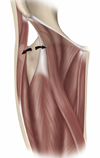
Figure 1.0
Muscles parted for
access to hip joint.

What are the benefits of anterior hip replacement?

Since anterior total hip replacement does not require the detachment or splitting of any muscles about the hip, thus preserving muscle strength, patients report less pain as well as a quicker return of function after surgery (see Figure 1.0).

Richard Murlless, a 65-year-old Sahuarita resident, found this to be true after undergoing anterior hip replacement in February with Dr. Petrow. Murlless could bear weight and walk, using a walker, within the first week following surgery. Murlless explains that soon after surgery he had “less pain than what I was suffering before surgery.”

Murlless opted to wait until a new surgical table was available at the hospital to have his hip replaced because he did not want to be “incapacitated” for several months with the conventional approach. Both Dr. Petrow and Dr. Bowers, who uses this special operating table and real-time intra-operative X-rays, have the ability to position the replaced hip components more accurately and reproduce the hip’s natural anatomy (see Figure 2.0).

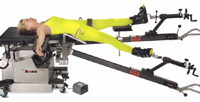
For example, the table is designed to allow extension of a patient’s leg downward, which gives frontal access to the hip that is not possible with conventional tables. It also allows the use of intra-operative X-ray, which gives a more accurate recreation of the patient’s leg length.

Figure 2.0
Operating table developed for anterior hip surgical technique.
 
Lastly, since the hip is reconstructed through the front without destabilizing the structures on the back of the joint, there does not appear to be any reason to place patients on routine hip precautions post-operatively, such as limited hip motion for 6-8 weeks.Murlless began his rehabilitation quickly following surgery and recovered nearly 100% of his previous range of hip motion after 4 sessions of physical therapy. He says his progress is on par with others who have received this procedure, but those who he has spoken to are impressed. Since surgery, 7 weeks have passed and he now considers himself fully recovered and pain-free.Dorothy Krieger, of Saddlebrooke, Arizona, had a similar experience in her recovery following anterior THA back in March. Krieger felt her left hip was “unreliable” and eventually she was unable to walk because of constant pain. When discussing with friends, they were confident in Dr. Bowers’ skills and gave encouraging testimonials for this procedure. Krieger said those comments were the “driving force behind my decision to have surgery.”

The 62-year-old underwent anterior total hip replacement on March 2 and was able to walk without an assistive device after one week; then she completed physical therapy 4 weeks after that. Krieger says she is happy with the result and is able to enjoy activities again, like hiking.

What hip approach is recommended?

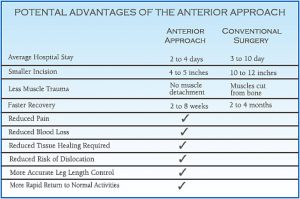
Since every hip exposure has specific pros and cons (see Figure 3.0), it is recommended to discuss your options with your surgeon. It is the job of the surgeon to match each individual patient’s need to the specific approach. Patients and surgeons want to minimize pain and speed recovery, yet the main objective of hip replacement is to provide patients with a well done operation, with good component position, and the expectation that it will last for the next 20 years.

Figure 3.0  Advantages associated with the anterior approach compared to conventional surgery.

Helping Underprivileged Patients in Ecuador

I recently returned from a trip to Quito, Ecuador, along with staff from Tucson Orthopaedic Institute and other personnel, where we provided total knee replacements to patients with limited access to orthopaedic treatment. The group was created by Luis Piedrahita, MD, who has been involved with medical missions for 12 years and often participates with a similar group one or more times a year.

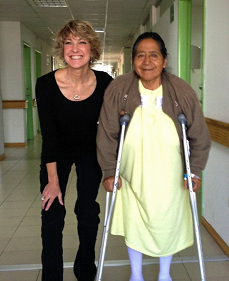
Lori Bryant, PT smiles with a patient

This trip was the first that Dr. Piedrahita coordinated on his own and he invited many colleagues from Tucson Orthopaedic Institute, including orthopaedic surgeon, Edward Petrow, Jr., DO, Laura Zimmerman, NP, and myself, Lori Bryant, PT. Zach Nandin, surgery technician at St. Mary’s Hospital, Sarah Gude, medical student, Jamison Trevino and Jordan Smith, from Stryker, also made the trip.

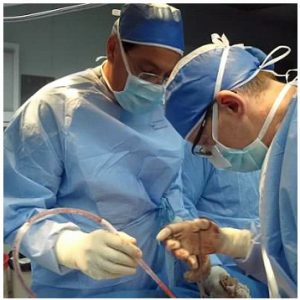
Luis Piedrahita, MD and Edward Petrow, DO performing surgery in Ecuador

Following a selection process, the team provided ten patients with knee replacements. All of the surgeries were performed in an operating room at Hospital Padre José Carollo. Stryker donated all of the implants, Tucson Medical Center donated much of the medical supplies, and OneStop Affordable Home Medical Equipment, a program of Jewish Family & Children Services of Southern Arizona, supplied all of the crutches.

Although the surgical conditions were very primitive and we had to improvise with limited supplies, the outcomes were extremely rewarding. The patients were incredibly grateful, breaking out in spontaneous applause when we arrived, and crying in gratitude after their surgeries for giving them the opportunity to walk once again.

 All of us that had the opportunity to go on this trip were given a chance to see what gratitude really looks like. These patients had so very little…no ice in the hospital, minimal pain control, and only one of the patients had his own cane.

Dr. Piedrahita hopes to repeat this trip on an annual basis, involving more people and providing a greater number of surgeries to those less fortunate living in our southern hemisphere.

I am honored and proud to work alongside my colleagues who donated their time and expertise to this extraordinary venture, and I encourage any of you who might be interested in visiting Ecuador to mark your calendars for the first week of November 2013. Hasta la vista!

Written by Lori Bryant, PT

Front: Zach Nandin, Laura Zimmerman, NP, Sarah Gude, Lori Bryant, PT
Back: Edward Petrow, DO, Jamison Trevino, Luis Piedrahita, MD, Jordan Smith

Something More: Osteoarthritis

Most of us know better than to drain the oil from our car and let the motor run. The heat from the friction would soon cause it to seize, destroying it in minutes.

Osteoarthritis, the most common form of arthritis, is another example of what happens when protection against friction is removed. It occurs when the cartilage, the smooth tissue covering the ends of bones where they meet at our joints, breaks down and wears away. The bones rub together, causing pain, swelling, and stiffness. Bone spurs develop, permanently changing the joint’s shape.

The result, as the approximately 27 million Americans who are afflicted with osteoarthritis know too well, is painful and even crippling.

Osteoarthritis is incurable, and no cure is expected in the foreseeable future. Still, advances in medical technology and research have made inroads both in treatment and prevention.

While osteoarthritis is simply wear and tear on joints, genetics and lifestyle are factors in predicting who may experience osteoarthritis. Trauma to joints from sports and occupations can break down cartilage.

An Ounce of Prevention

People who want to minimize or delay onset of osteoarthritis can take steps, advises Edward P. Petrow, Jr., DO, a physician with the Tucson Orthopaedic Institute.

“The most important thing you can do is lead an active lifestyle,” he says. “The saying that a rolling stone gathers no moss applies to our bodies. We peak around age 25 and are in a state of decline from then on. The only thing that seems to slow that down is diet and exercise.”

The onset of osteoarthritis doesn’t mean activity should end, he notes, but it might require switching gears. Giving up exercise can make it worse.

“People with arthritis sometimes have to change gears,” Petrow says. “They may switch from running to cycling or swimming.”

Runners may feel they are losing exercise benefits, for example, if they switch to walking, but walking burns the same amount of calories per mile covered as running. It takes longer to cover the distance, but walking also can be more enjoyable.

It’s important to choose an alternative you enjoy, he adds.

“I ask people, ‘What do you love to do?'” he says. “If you love to run and I tell you to swim and you hate to swim you’re not going to do it. Find an activity that you can modify to fit your lifestyle.

“I think Tai Chi is fantastic,” Petrow continues. “I encourage our patients to practice it, more for balance and proprioception. Balance is like muscle: you can train and improve it.

Better balance and muscle tone help prevent falls, and can decrease pressure on joints.

“Every little bit helps,” he says, but people should not expect total relief.

“Muscles are shock absorbers and exercise can help,” he says, “but when you have bone on bone, it doesn’t matter how much muscle tone you have.”

As with most medical conditions, a healthy diet is important in minimizing damage to joint, and that’s a lot less complicated than some people may realize. Expensive supplements, for example, are likely to be a waste of money.

“A lot of the information about supplements is voodoo,” Petrow says. “Keeping a healthy body weight will by far help your joints more. Every extra pound of body weight exerts three to four pounds of force on you knee joints, every step, every day.

“Calories are just a number, and you need to look at how to deduce them,” he adds. “It’s simple math.”

Fad diets and supplements come and go, he notes, and some might do actual harm.

“Study results are published in a vacuum, and often the media grabs one tidbit and it becomes the new in thing to do,” he says, adding that mainstream media can play a role in popularizing unproven diets and supplements.

Not Your Grandmother’s Joint Replacement

People contemplating joint replacement may be reluctant to consider it because of past experiences by friends and relatives. They may want to take another look; a lot has changed, even in the past 10 years.

“The marriage of techniques and technology has helped orthopedics deliver a better lifestyle,” says Petrow.

People who were advised to delay replacement because the joints wear out now can expect them to last 20-25 years. And the surgery techniques have improved significantly. The practice of “banking blood ahead of time for transfusions during surgery is no longer needed, for example, and the hospital stay has decreased from three weeks to a few days. 

“We are delivering joints through smaller incisions, which are less invasive,” Petrow said. “When you combine that with improved technology we’re entering a golden age of what we are able to do.”

“The nuts and bolts are the same,” he continues. “We have better instrumentation to make more accurate incisions, and we’ve improved our techniques.”

Surgeons now do hip replacement through the front, which reduces the amount of muscle to cut, making recovery faster.

Technology and improved methods help, but Petrow says the skill and experience of the surgeon remain the most critical considerations for people seeking joint replacement.

Drug Therapies: Relief, but at a Cost

Medication can relieve the pain, but Petrow urges caution in using drugs to treat arthritis.

“I remember a pharmacology professor telling us that all medicines are poison, and we should try to avoid taking poisons,” he says. “Nutritional therapies like glucosamine and injectibles will not bring back what’s gone; they just treat the symptoms, and they come with a price.”

Sometimes the price can be higher than people realize.

“Celebrex was a popular arthritis prescription drug, then we learned about heart disease and stroke issues,” Petrow says, adding that with medications, “less is better, so use them only when you need to.”

At some point, Petrow says, science will allow doctors to harvest cartilage out of a joint, grow it in a laboratory and transplant it to a patient, but as of now such procedures are just a dream.

“Growing and transplanting cartilage is the Holy Grail in orthopedics right now,” he says. But it’s a long way off.”

Osteoarthritis is incurable, but incurable does not mean hopeless. People with osteoarthritis have a variety of treatment options, and going over them with a physician could minimize the impact on their enjoyment of life.

“If you have pain in your joint that limits your lifestyle, you should talk to someone about it,” Petrow advises. “People may think they are too old or too young to undergo treatment for arthritis, but you’re never too old or too young to enjoy your life, and you only get one.

Don’t assume that what was true for a friend or relative 10 or 20 years ago applies today.

“A lot of misconceptions have lingered from the earlier days of orthopedic surgery,” he says. “Motion is life. If you can’t enjoy your life, sit down and talk to someone about it – no matter what your age is.”

Written by Mark Flint

As published in Tucson Osteopathic Medical Foundation publication, “Something More for You, the Osteopathic Patient”, Vol. 14, Issue 1, 2012

Exhaust Options Before Joint Replacement Surgery

Non-steroidal anti-inflammatory drugs (NSAIDs) acetaminophen, glucosomine and chondroitin nutritional supplements, cortisone injections and rooster cartilage – yes, rooster cartilage – may help avoid the need for hip and knee joint replacement surgery.

About 65 people came to the East Social Center on Thursday to hear Dr. Edward Petrow, a surgeon at the Tucson Orthopaedic Institute, talk about remedies for stiff and weak joints before considering joint replacement surgery.

Dr. Edward Petrow speaks to members of the audience after his talk.

Petrow explained that osteoarthritis is the wearing down of articular cartilage of the joints and begins at 25. As one ages, symptoms of the wearing down may result in joint soreness, stiffness and pain caused by weakening of the muscles surrounding the joint due to inactivity.

Acetaminophen doesn’t decrease or reduce inflammation, but will reduce pain, he said.

Glucosomine and chrondroitin, a food supplement not regulated by the Food and Drug Administration, doesn’t work for everyone and usually takes three months to determine whether it is effective.

Cortisone injections can reduce swelling and discomfort, and if effective may be repeated every three months.

Hyaluronic acid injections, which comes from the cartilage of rooster combs, is said to restore lubrication and fluid in joints and can last six to 12 months.

Weight loss can affect joints in a positive way.

“Lose one pound and it reduces three to four pounds of pressure on your knees,” Petrow said.

If All Else Fails

Though he advises trying non-surgical remedies first, Petrow said the time to consider joint replacement is when there is loss of function.

About 500,000 hip replacement surgeries are done annually in the U.S. Though knee replacement is the gold standard of care, minimally invasive knee surgery will result in less trauma, less bleeding and pain and a smaller scar,

Exhaust all non-surgical options. Minimally invasive technology reduces complications, Petrow advised.

New advances include computer-assisted surgery where a computer makes a model of a patient’s hip or leg, and intra-operative imaging is now available for more accurate leg length with hip replacement surgery.

For an appointment with Petrow, call the Tucson Orthopedic Institute at (520) 382-8200.

Written by Ellen Sussman, Special to the Green Valley News

As published in the Green Valley News, Wednesday, December 21, 2011

Treating Arthritis: Making Gains Against The Pain

Although there are 100 types of arthritis, and many forms of treatment, research is getting us close to significant improvements in care. Here are some of the local developments that offer hope.

Arthritis is America’s number one cause of disability, costing the U.S. economy more than $128 billion a year, according to the Arthritis Foundation. The organization’s Southern Arizona Chapter reports that in Arizona alone, approximately 1.1 million people have some form of the disease. Six thousand of those are children.

Considering how prevalent the disease is, there’s still much research, education and drug testing to be done. Arthritis is complicated – it has 100 different forms, including many autoimmune disorders; it can be difficult to diagnose; and despite the number of drugs on the market, there’s no single treatment that works for everyone.

“Arthritis is a Greek word meaning ‘swelling of the joint,'” says Susan Sweeney, executive director of the Arthritis Foundation’s Greater Southwest Chapter. “Osteoarthritis (OA) is the number one disease in our group; rheumatoid arthritis (RA) is second. Then there’s lupus, which can be of the skin or different kinds; fibromyalgia; or psoriatic arthritis,” the type PGA player Phil Mickelson was diagnosed with in 2010. Autoimmune forms of arthritis have very different causes than OA, but they generally all create joint pain.

Two local medical groups are aggressively pursuing advancements in the field of arthritis, with cutting-edge research being conducted at the Arizona Arthritis Center and innovative patient treatments being done at Tucson Orthopaedic Institute (TOI).

Located on the University of Arizona College of Medicine campus, the Arizona Arthritis Center is headed by Eric Gall, MD, the center’s founder and current interim director.

He says the main focus at the center is immunology and inflammation. A current study, led by John Szivek, MD, is exploring a new treatment for OA patients. “Dr. Szivek worked with artificial joints early on. Now he’s studying re-growth of cartilage in damaged joints using non-controversial stem cells,” Dr. Gall explains. “They’re taken from the fat of the abdomen, he grows them and reintroduces them to grow into new cartilage. This is a new approach in this area. His lab is waiting to be FDA approved to do the study in humans.”

Other research underway at the center includes investigating how to control lupus, clinical studies on pharmaceuticals and a look at valley fever in arthritis patients who are on biologic agents. “Fungal infections can come out in these patients,” and they must go off the drugs, Dr. Gall says. In the past, there’s been uncertainty about whether the patients could continue treatment after valley fever symptoms dissipated. “We’re asking, can you treat again after going off the drug?”

Physicians at Tucson Orthopaedic Institute are attracting attention for three progressive procedures that help those with deteriorating joints. Eric Anctil, MD is performing the Scandinavian Total Ankle Replacement (STAR) surgery, which results in greater range of motion than what’s achieved with other options.

The STAR device, states Dr. Anctil, “is the only implant that’s mobile bearing.” Other ankle replacement devices are fixed bearing and therefore limit motion, as does ankle fusion. The procedure was developed by a Danish surgeon and has been commonplace in Europe and Canada for 15 to 20 years. The Food and Drug Administration approved the technique in the U.S. two years ago.

Anctil moved to Tucson from Canada, where he’d been performing the surgery for years. “When I first came here, I didn’t use another replacement; I waited for the FDA approval. I was the first one in Arizona to do it. Now there are one or two doctors who do the procedure in Tucson and some in Phoenix,” he says.

Those who have put off hip replacement surgery in anticipation of something less invasive now have another option, currently being performed by Edward Petrow Jr., DO. “With anterior hip replacement (AHR), instead of cutting muscle to get to the hip joint, we move the muscle to the side from the front. It’s a quicker initial recovery and patients are off the cane or walker in the first week or two. Other advantages are that there are no hip precautions and a much lower risk for hip dislocation.” The incision, he says, is 8-10 centimeters.

Using real time X-ray makes the surgery more precise. “We use the opposite hip as a template to match leg length,” an issue which occasionally arises with other hip replacement techniques, Dr. Petrow notes. AHR is done on a special surgical table that allows extension of the patient’s leg downward, thus giving front access to the hip.

Like Dr. Anctil, Dr. Petrow moved to Tucson from an area where the surgery already was being performed. “I came from Virginia and did it there. I was surprised more people weren’t doing it here.” Dr. Petrow’s primary obstacle was convincing Hospital administrators to purchase the special table at a cost of $70,000 to $120,000, which they eventually did.

The surgery also requires special training. After performing approximately 40 AHR surgeries during his last year in Virginia and a dozen here, Dr. Petrow believes he’s the most experienced AHR doctor in Tucson. “It’s now sweeping the country,” he adds.

Just approved by the FDA is an innovative procedure for improving ee s, one that uses vitamin E to extend the life of the device. When this article was written, Scott Slagis, MD was the only Tucson doctor lined up to perform the surgery, which will begin once the implants are shipped. He explains that plastics in joint replacements are generally radiated during manufacturing to make them more durable. But radiation releases free radicals into the plastic, which can lead to oxidation and subsequent wear.

“You add vitamin E, which is an antioxidant, and it neutralizes the free radicals. It then may last longer and be stronger,” Dr. Slagis reports. He says the procedure is not age restricted, but it’s especially good for younger, active patients because of its longevity.

Dr. Slagis has seen small advancements in knee replacement procedures, which he’s been performing for 20 years. But he believes the vitamin E implant could prove to be significant. “This is one that may have profound implications,” he says.

Children With Arthritis

Although support programs abound for kids with arthritis, medical attention can be harder to come by, with a shortage of doctors nationwide.

“There are no board-certified pediatric rheumatologists in Southern Arizona, states Deborah Jane Power, DO, of Catalina Pointe Arthritis and Rheumatology Specialists, P.C. “I’m the only rheumatologist in Southern Arizona willing to see kids with juvenile arthritis 15 and younger.” She and her partners also treat adults with RA and OA.

Power explains the differences between the two: “Osteoarthritis is a degenerative, wear-and-tear condition. Some is genetic, some caused by obesity or trauma and bad injuries, such as sports related. The distribution in the body is knees and hips, the base of the thumb and the joint closest to the fingernail.” While she said there are no drugs that slow the progression of OA, taking anti-inflammatory drugs can help, as can exercise.

“Rheumatoid arthritis is an autoimmune disease that starts in the joint. The body attacks the joint lining in the synovial capsule.This causes swelling, pain and loss of range of motion. It’s whole-body inflammation.You also can have fatigue and a low-grade fever,” Power notes.

Nutrition plays a part in arthritis, as well, she says. “Dr. Andrew Weil believes dairy is inflammatory. Things like turmeric, garlic, cayenne and green tea help with inflammation, so patients can be given that. Foods in the nightshade family cause inflammation — tomatoes, potatoes and eggplant.” She suggests that people with RA and other autoimmune diseases avoid gluten, as it can stimulate the immune system.

Arthritis Foundation – Greater Southwest Chapter

The foundation’s primary goals, notes Executive Director Susan Sweeney, are to increase awareness of the disease, raise funds for research and provide local support for people with arthritis. “Money raised in Tucson stays to provide programs and services in Southern Arizona,” she says. These include seminars, health fairs, exercise classes, educational material, referrals, scholarships and kids’ camps — all coordinated out of the Arthritis Foundation’s office at 310 S. Williams Boulevard.

“We have community education classes where a physician and I go out to senior centers, senior communities or to the work place. One big thing we do is arthritis exercise classes. Water exercise and Tai Chi are especially good choices for arthritis patients. We train instructors and have partnerships with Tucson Parks & Recreation, for example.”

Often, it can take eight weeks to see a rheumatologist, according to Sweeney, and people want information on the disease while they wait. “We send them support group information, Arthritis Today magazine and a drug guide from the national office.” Her staff can refer callers to one of eight rheumatology groups in town.

Major fundraising events for the foundation include the Arthritis Walk, held each spring; the Jingle Bell 5K Run & Fun Walk in December; and a newcomer last year, the Surgeons vs. Chefs Pumpkin Carving Contest.

Chris Stead, local Arthritis Walk coordinator, reported that this year’s event drew more than 500 participants and raised approximately $40,000 through pledges, donations and sponsorships. Held at Brandi Fenton Memorial Park on May 7, 2011, the one-mile walk was kicked off by Mayor Bob Walkup, followed by entertainment and activities.

“We had community vendors and booths like Sam’s Club, Desert Diamond Casino and orthopaedic teams,” notes Stead. Ronald McDonald performed magic tricks for the kids, a disc jockey played music and a splash pad cooled everyone Down. “There was a dogathon, and K-9 Loyal Companions gave doggie massages. Dogs get arthritis, too,” Stead remarks.

This year’s holiday-themed 5K fundraiser is slated for Dec. 3 at Reid Park, he says.“It’s a timed run, people dress in holiday gear and we give awards. There’s also a contest with dogs; you can dress up your pet. Funds help with juvenile arthritis family camps and other programs.”

The foundation holds three camps each year: Camp Cruz, a week-long summer camp for 11 to 16 year olds in New Mexico; an overnight camp for younger kids; and a family camp held locally.

As published in Tucson Lifestyle Magazine, December 2011

Written by Christy Krueger

Anterior Hip Replacements Are the Future: 5 Points from Dr. Edward Petrow

A growing number of joint replacement surgeons are beginning to perform hip replacement surgery using an anterior approach instead of the traditional posterior approach because of the benefits it has for the patient as well as the provider. It can be safely performed on many patients, as long as they have a low risk of fracture and normal anatomy.

Edward Petrow Jr., DO, an orthopedic surgeon at Tucson Orthopaedic Institute, discusses five points on performing anterior hip replacements and what it can mean for the future.

1. Difference in surgical technique. The traditional approach to hip replacement surgery is going through the back, splitting the buttock muscles and peeling back the hip muscles to access the joint. When surgeons employ the anterior approach to hip replacement surgery, they enter the hip through the front part of the joint. “When we take the anterior approach, we don’t detach or remove any muscles,” Dr. Petrow says. “From a recovery standpoint, that means less pain and quicker return to function.”

The anterior approach is a minimally invasive surgery because you can perform the whole procedure through a 10 centimeter or less incision. When surgeons eliminate the muscle disruption, patients don’t have to go on hip precaution, as other hip replacement patients do, and they can return to regular activity quicker.

2. Imaging technology allows for greater precision. In addition to providing a quicker recovery, the anterior approach can also allow surgeons to more precisely place the implant because they can use real-time X-ray guidance perioperatively. “With this equipment, you are watching the procedure on X-ray as you go in so you can see where the implant is going and get it exactly where you want it,” says Dr. Petrow. “This gives you better control of their leg length.”

Experienced surgeons know how to closely reproduce the patient’s leg length, but with the real time X-ray, they can measure both sides to make sure they are the same length. There have been many cases of hip replacement failures due to leg lengthening issues, but with the minimally invasive anterior approach those complications become nearly extinct.

3. Why the procedure isn’t more widespread. While the anterior approach may be less invasive and associated with fewer complications, surgeons without extra training in the technique will not be able to perform in a safe and effective manner. “You have to be committed to doing some extra training to be able to perform it safely,” says Dr. Petrow. “The other issue is that you have to have specialized table to allow you to get to the hip from the front. The hospital has to be committed to getting the table and the surgeon has to commit to the extra training, but it’s a better treatment.”

It’s often hard for surgeons to stay abreast of the most recent treatments and techniques, but it can be worthwhile. The anterior approach may be different, but surgeons can still use the same instrumentation they’ve always used during the surgery. “Just because you’ve done hip replacement surgery the same way over your career doesn’t mean you can’t change,” he says. “Some surgeons won’t and that’s fine, because the posterior approach can still provide a good outcome.”

4. Hospitals benefit from the technique as well. From his perspective, Dr. Petrow says the extra time and financial investment in the anterior approach is worthwhile because he hasn’t experienced any complications, nerve problems or dislocations from patients undergoing anterior hip replacements. It’s also been his experience that these patients are up walking faster, off pain medication sooner and discharged from the hospital sooner.

“We’ve experienced a whole day decrease in the length of stay, from three days to two,” says Dr. Petrow. “All the way around, the short-term recovery has been quicker and there haven’t been any complications.”

5. Anterior hip replacements are the way of the future. As patients find out more about the advantages associated with anterior hip replacements, they will demand that type of procedure and drive it forward, says Dr. Petrow. The technology developed in the past few years has made it an easier and more accessible procedure for surgeons to perform. However, in the future he doesn’t see the procedure becoming much less invasive than it is now, which means further innovation will come from implant design and placement.

“You don’t want to sacrifice good results, and there needs to be a balance between minimally invasive techniques and achieving durable, reproducible results with implants,” he says. “I know the implants I use are durable and I can see patients have a good outcome. It’s the next step forward in what we do as far as hip replacement surgery.”

Written by Laura Dyrda

As published in Becker’s Spine Review, Tuesday, July 26, 2011

Search

+