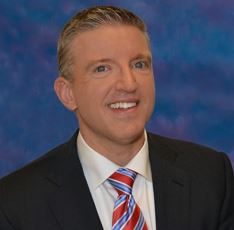
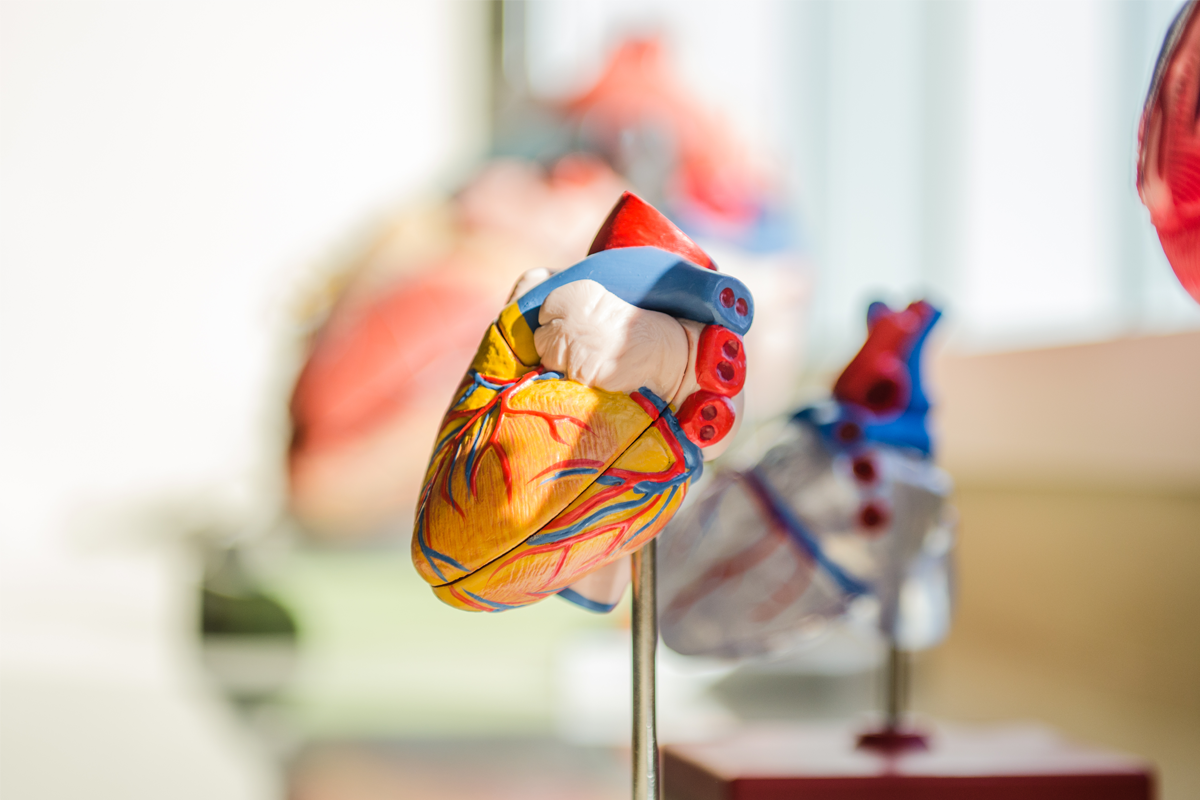
Physician Highlight: Meet Dr. Edward Petrow!

Meet one of Tucson Orthopaedic Institute’s excellent Total Joint Replacement surgeons, Dr. Edward Petrow! When he is not in the gym working out or boxing, he focuses on helping patients improve their quality of life. Dr. Petrow has been with TOI for nine years and is bringing some of the newest and most advanced technology to the game: the MAKO® Robot. Dr. Petrow is going into his second year using the MAKO® when performing total hip, partial knee, and total knee replacement surgery.

With a smile, he describes orthopaedic surgery as “glorified carpentry.” Rods and blocks were the previous tools to use when performing this type of surgery. Today it has evolved into the use of lasers and robotics to measure and build with much higher accuracy.  The way Dr. Petrow describes and talks about the use of this technology shows his true passion for orthopaedics; this passion led him to become the first physician in Southern Arizona to perform a robotic anterior hip replacement. This type of hip replacement has the surgeon approaching from the front instead of the side or back. This approach allows the surgery to be done through a smaller incision which summits to less pain, less muscle trauma, a shorter hospital stay, and an easier and shorter recovery.

When asked why Dr. Petrow enjoys being an orthopaedic surgeon, he could not form the exact reason into words. “It’s like asking someone why your favorite color is your favorite color,” he joked. Aside from being a Racecar Driver, or a Rock Star, he cannot see himself doing anything else; he truly enjoys helping patients and finds total gratification in helping them get back to activities they might not have enjoyed in years!

To learn more about Dr. Petrow and the MAKO® Robot, please visit: http://tucson-old.levoengage.com/doctors/edward-p-petrow-jr-do-hip-knee-surgeon/ 

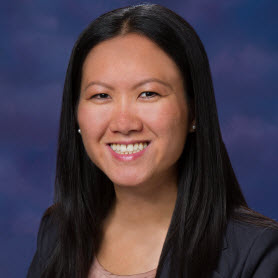
Physician Highlight: Meet Dr. Natalie Hua!

Meet Tucson Orthopaedic Institute’s surgical foot and ankle podiatrist, Dr. Natalie Hua! Dr. Hua offers both nonsurgical and surgical treatments for foot and ankle ailments and injuries, treating patients of all ages. Dr. Hua treats many different types of foot and ankle conditions including: ingrown toenails, bunions, hammertoes, sports injuries, fractures, tendonitis, tendon ruptures, and many more! Dr. Hua emphasizes that every patient is different, and she does not approach patients with a “one shoe fits all” mentality. She always evaluates each patient individually and provides specific recommendations based on the severity and duration of the foot and/or ankle condition. Her number one goal at TOI is to help patients achieve a pain-free life that leads to healthiness and happiness.

Did you know both feet make up about a quarter of all 206 bones in the human body? Each foot contains 26 bones, 33 joints, 19 muscles, 10 tendons, and 107 ligaments. Dr. Hua enjoys knowing every complex detail, structure, and different problems patients might have with their foot or ankle. Within her practice, she is always conservative in her treatment approach, suggesting nonsurgical treatments first, and only recommending surgery as a last resort.

Outside of TOI Dr. Hua has a strong passion for hiking, traveling, sewing, scuba diving and creating artwork. If you ever get the chance to see her at TOI’s St. Mary’s or East locations, her beautiful artwork can be seen throughout the clinics.

Dr. Hua sees patients out of TOI’s St. Mary’s, East and Rincon locations. To learn more, or to request an appointment with Dr. Hua, please visit: http://tucson-old.levoengage.com/doctors/natalie-t-hua-dpm-foot-ankle-surgeon/

Treating Arthritis: Making Gains Against The Pain

Although there are 100 types of arthritis, and many forms of treatment, research is getting us close to significant improvements in care. Here are some of the local developments that offer hope.

Arthritis is America’s number one cause of disability, costing the U.S. economy more than $128 billion a year, according to the Arthritis Foundation. The organization’s Southern Arizona Chapter reports that in Arizona alone, approximately 1.1 million people have some form of the disease. Six thousand of those are children.

Considering how prevalent the disease is, there’s still much research, education and drug testing to be done. Arthritis is complicated – it has 100 different forms, including many autoimmune disorders; it can be difficult to diagnose; and despite the number of drugs on the market, there’s no single treatment that works for everyone.

“Arthritis is a Greek word meaning ‘swelling of the joint,'” says Susan Sweeney, executive director of the Arthritis Foundation’s Greater Southwest Chapter. “Osteoarthritis (OA) is the number one disease in our group; rheumatoid arthritis (RA) is second. Then there’s lupus, which can be of the skin or different kinds; fibromyalgia; or psoriatic arthritis,” the type PGA player Phil Mickelson was diagnosed with in 2010. Autoimmune forms of arthritis have very different causes than OA, but they generally all create joint pain.

Two local medical groups are aggressively pursuing advancements in the field of arthritis, with cutting-edge research being conducted at the Arizona Arthritis Center and innovative patient treatments being done at Tucson Orthopaedic Institute (TOI).

Located on the University of Arizona College of Medicine campus, the Arizona Arthritis Center is headed by Eric Gall, MD, the center’s founder and current interim director.
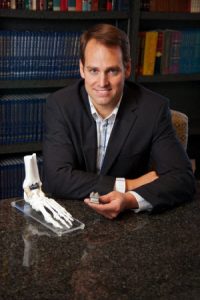
He says the main focus at the center is immunology and inflammation. A current study, led by John Szivek, MD, is exploring a new treatment for OA patients. “Dr. Szivek worked with artificial joints early on. Now he’s studying re-growth of cartilage in damaged joints using non-controversial stem cells,” Dr. Gall explains. “They’re taken from the fat of the abdomen, he grows them and reintroduces them to grow into new cartilage. This is a new approach in this area. His lab is waiting to be FDA approved to do the study in humans.”

Other research underway at the center includes investigating how to control lupus, clinical studies on pharmaceuticals and a look at valley fever in arthritis patients who are on biologic agents. “Fungal infections can come out in these patients,” and they must go off the drugs, Dr. Gall says. In the past, there’s been uncertainty about whether the patients could continue treatment after valley fever symptoms dissipated. “We’re asking, can you treat again after going off the drug?”

Physicians at Tucson Orthopaedic Institute are attracting attention for three progressive procedures that help those with deteriorating joints. Eric Anctil, MD is performing the Scandinavian Total Ankle Replacement (STAR) surgery, which results in greater range of motion than what’s achieved with other options.

The STAR device, states Dr. Anctil, “is the only implant that’s mobile bearing.” Other ankle replacement devices are fixed bearing and therefore limit motion, as does ankle fusion. The procedure was developed by a Danish surgeon and has been commonplace in Europe and Canada for 15 to 20 years. The Food and Drug Administration approved the technique in the U.S. two years ago.

Anctil moved to Tucson from Canada, where he’d been performing the surgery for years. “When I first came here, I didn’t use another replacement; I waited for the FDA approval. I was the first one in Arizona to do it. Now there are one or two doctors who do the procedure in Tucson and some in Phoenix,” he says.
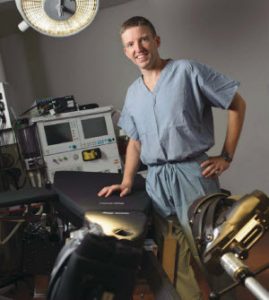
Those who have put off hip replacement surgery in anticipation of something less invasive now have another option, currently being performed by Edward Petrow Jr., DO. “With anterior hip replacement (AHR), instead of cutting muscle to get to the hip joint, we move the muscle to the side from the front. It’s a quicker initial recovery and patients are off the cane or walker in the first week or two. Other advantages are that there are no hip precautions and a much lower risk for hip dislocation.” The incision, he says, is 8-10 centimeters.

Using real time X-ray makes the surgery more precise. “We use the opposite hip as a template to match leg length,” an issue which occasionally arises with other hip replacement techniques, Dr. Petrow notes. AHR is done on a special surgical table that allows extension of the patient’s leg downward, thus giving front access to the hip.

Like Dr. Anctil, Dr. Petrow moved to Tucson from an area where the surgery already was being performed. “I came from Virginia and did it there. I was surprised more people weren’t doing it here.” Dr. Petrow’s primary obstacle was convincing Hospital administrators to purchase the special table at a cost of $70,000 to $120,000, which they eventually did.
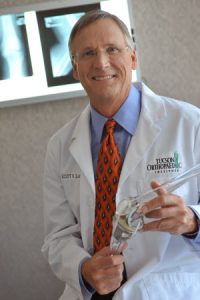
The surgery also requires special training. After performing approximately 40 AHR surgeries during his last year in Virginia and a dozen here, Dr. Petrow believes he’s the most experienced AHR doctor in Tucson. “It’s now sweeping the country,” he adds.

Just approved by the FDA is an innovative procedure for improving ee s, one that uses vitamin E to extend the life of the device. When this article was written, Scott Slagis, MD was the only Tucson doctor lined up to perform the surgery, which will begin once the implants are shipped. He explains that plastics in joint replacements are generally radiated during manufacturing to make them more durable. But radiation releases free radicals into the plastic, which can lead to oxidation and subsequent wear.

“You add vitamin E, which is an antioxidant, and it neutralizes the free radicals. It then may last longer and be stronger,” Dr. Slagis reports. He says the procedure is not age restricted, but it’s especially good for younger, active patients because of its longevity.

Dr. Slagis has seen small advancements in knee replacement procedures, which he’s been performing for 20 years. But he believes the vitamin E implant could prove to be significant. “This is one that may have profound implications,” he says.

Children With Arthritis

Although support programs abound for kids with arthritis, medical attention can be harder to come by, with a shortage of doctors nationwide.

“There are no board-certified pediatric rheumatologists in Southern Arizona, states Deborah Jane Power, DO, of Catalina Pointe Arthritis and Rheumatology Specialists, P.C. “I’m the only rheumatologist in Southern Arizona willing to see kids with juvenile arthritis 15 and younger.” She and her partners also treat adults with RA and OA.

Power explains the differences between the two: “Osteoarthritis is a degenerative, wear-and-tear condition. Some is genetic, some caused by obesity or trauma and bad injuries, such as sports related. The distribution in the body is knees and hips, the base of the thumb and the joint closest to the fingernail.” While she said there are no drugs that slow the progression of OA, taking anti-inflammatory drugs can help, as can exercise.

“Rheumatoid arthritis is an autoimmune disease that starts in the joint. The body attacks the joint lining in the synovial capsule.This causes swelling, pain and loss of range of motion. It’s whole-body inflammation.You also can have fatigue and a low-grade fever,” Power notes.

Nutrition plays a part in arthritis, as well, she says. “Dr. Andrew Weil believes dairy is inflammatory. Things like turmeric, garlic, cayenne and green tea help with inflammation, so patients can be given that. Foods in the nightshade family cause inflammation — tomatoes, potatoes and eggplant.” She suggests that people with RA and other autoimmune diseases avoid gluten, as it can stimulate the immune system.

Arthritis Foundation – Greater Southwest Chapter

The foundation’s primary goals, notes Executive Director Susan Sweeney, are to increase awareness of the disease, raise funds for research and provide local support for people with arthritis. “Money raised in Tucson stays to provide programs and services in Southern Arizona,” she says. These include seminars, health fairs, exercise classes, educational material, referrals, scholarships and kids’ camps — all coordinated out of the Arthritis Foundation’s office at 310 S. Williams Boulevard.

“We have community education classes where a physician and I go out to senior centers, senior communities or to the work place. One big thing we do is arthritis exercise classes. Water exercise and Tai Chi are especially good choices for arthritis patients. We train instructors and have partnerships with Tucson Parks & Recreation, for example.”

Often, it can take eight weeks to see a rheumatologist, according to Sweeney, and people want information on the disease while they wait. “We send them support group information, Arthritis Today magazine and a drug guide from the national office.” Her staff can refer callers to one of eight rheumatology groups in town.

Major fundraising events for the foundation include the Arthritis Walk, held each spring; the Jingle Bell 5K Run & Fun Walk in December; and a newcomer last year, the Surgeons vs. Chefs Pumpkin Carving Contest.

Chris Stead, local Arthritis Walk coordinator, reported that this year’s event drew more than 500 participants and raised approximately $40,000 through pledges, donations and sponsorships. Held at Brandi Fenton Memorial Park on May 7, 2011, the one-mile walk was kicked off by Mayor Bob Walkup, followed by entertainment and activities.

“We had community vendors and booths like Sam’s Club, Desert Diamond Casino and orthopaedic teams,” notes Stead. Ronald McDonald performed magic tricks for the kids, a disc jockey played music and a splash pad cooled everyone Down. “There was a dogathon, and K-9 Loyal Companions gave doggie massages. Dogs get arthritis, too,” Stead remarks.

This year’s holiday-themed 5K fundraiser is slated for Dec. 3 at Reid Park, he says.“It’s a timed run, people dress in holiday gear and we give awards. There’s also a contest with dogs; you can dress up your pet. Funds help with juvenile arthritis family camps and other programs.”

The foundation holds three camps each year: Camp Cruz, a week-long summer camp for 11 to 16 year olds in New Mexico; an overnight camp for younger kids; and a family camp held locally.

As published in Tucson Lifestyle Magazine, December 2011

Written by Christy Krueger
TMC’s Tucson Orthopaedic Institute Improves Patient Outcomes with Surgical Precision

Source: Inside Tucson Business published on May 26, 2017

Written by Logan Burtch-Buss

Photo Credit to Eric Suhm

When Tucson resident Melissa Anderson underwent her first full knee replacement surgery in 2010, she said the painful rehabilitation process lasted three months. Roughly two months ago, Anderson received her second full knee replacement surgery, and it only took seven weeks before the 65-year-old woman was out dancing and riding a recombant bicycle with her husband, John.

Anderson’s most recent surgery took place at TMC’s Tucson Orthopaedic Institute with the use of Stryker’s Mako Robotic-Arm Assisted Total Knee application.

Typically, a knee replacement is done using manual instruments, and cutting-guides have to be placed and positioned according to a surgeon’s visual, said Dr. Russell G. Cohen, who handled Anderson’s second replacement. Traditional replacements are taught in a certain manner and guides are placed in similar fashion for all patients.

But not every knee is the same, Cohen said, and he said one of the pitfalls of knee replacement is the recovery time because the process involves recreating “soft tissue tensioning.” By having a robot with which the patient’s anatomy is registered from a CAT scan, the physician can feel how they want the knee to end up before ever starting the procedure, rather than make the cuts and try to catch up and make everything fit just right.

By fine-tuning every procedure to the physical specifications of each patient down to the millimeter, the recovery process is expedited, and patient satisfaction is improved as a result.

“I was absolutely shocked at the difference with the difference I felt between the first one and the second one,” Anderson said. “There is a really deep knee-bone pain you get with that kind of surgery … and I didn’t have it. I was worried about doing it again because I didn’t want to spend another three months recovering, but I was released from [physical therapy] in four weeks.”

Cohen has completed several dozen Mako Total Knee surgeries, and said a great majority of those patients have left the hospital the following day, all recovering much like Anderson. In addition to the implementation of the Mako, Cohen said credit for recovery improvement must also be given to improvements to anesthesia practices and other hospital procedure.

Though TOI has already been recognized for its excellence in orthopedic practice, constantly improving upon that level of service is of the utmost importance to TMC moving forward, said chief operations officer Karen Mlawsky.

Mlawsky added that with a “superstar” like Cohen in such an important practice such as orthopedics, in which TMC holds the majority market share, it is important to continue to support physicians and surgeons, and implementing robotics does just that.

“TMC believes that it is really important for us to partner with our physicians, and when one comes forward and says that they believe the technology is going to make an impact on our patient’s outcomes, we want to listen,” she said. “We believe that orthopedics is very important to us, we believe that robotics is very important to us, and the other side of that is our role in Tucson. We are the only community hospital and we think it is important to do things that help people stay well. This technology is about getting people well quickly and keeping a person active, that’s our mission.”

According to TMC, total knee replacements in the United States are expected to increase 673 percent by 2030, and Cohen said the success of the Mako in handling full knee (and hip) replacements bodes well for the community’s future.

“There are some things that are very much a physician or surgeon looking at and trying to create whatever they are doing in the right space or angle, and I think with imaging technology and the Mako, it can be a homerun every time instead of most of the time,” he said.

Anderson, who now considers herself an advocate for the robotic knee replacement, said the outcome from her own operation was an absolute success, and said she would work with any potential patient nervous at the prospect of going under the robotic knife.

“It’s just incredible,” she said. “I was so surprised because I was ready to do that three month thing, and not to not have to do that is such a gift. Not to have that deep knee pain, that bone pain, is amazing.”

New Office Hours Now Open in Continental Reserve

Tucson Orthopaedic Institute physician, Troy Taduran, DO expands office hours to provide convenient access to specialized orthopaedic care in the Marana community.

Open Mondays & Fridays

8:00 AM – 5:00 PM

8333 N. Silverbell Rd., Suite 141

Tucson, AZ 85743

Patients in Marana can now benefit from seeing an orthopaedic specialist for sports related injuries and acute musculoskeletal injuries – no appointment necessary. The Marana clinic provides same-day or walk-in appointments for prompt treatment of orthopaedic injuries. X-ray and casting services also serve patients with all the orthopaedic care needed in one visit.

Troy M. Taduran, DO is a fellowship trained Sports Medicine physician specializing in non-surgical Sports Medicine, Neuromuskuloskeletal Medicine, and Osteopathic Manipulative Medicine. Dr. Taduran moved to Tucson in 2014 and is the current team physician for Marana and Mountain View High School.

Dr. Taduran treats and manages sports-related concussions, and uses Osteopathic Manipulative Treatment (OMT) and Regenerative Injection Therapy (RIT) to supplement the healing of musculoskeletal injuries and pain. He says, “My goal is to understand the cause of pain and treat it at its origin using the body’s inherent ability to heal itself.”

Dr. Taduran also sees patients at three of Tucson Orthopaedic Institute’s locations, including St. Mary’s; Northwest, 6320 N. La Cholla Blvd, #200; and Oro Valley, 1521 E. Tangerine Rd., #101. For scheduling information, call (520) 382-8200 or visit www.tucsonortho.com.

5 Signs You May Have Hip Arthritis

Written by: Dr. Ali Dalal 

Degenerative joint disease is a very common cause of hip pain. Figuring out whether the true source of pain is the hip or the back can be a diagnostic challenge for both the doctor and the patient. Indeed, several patients have both back and hip problems. Here are 5 common signs that the pain you are experiencing is coming from your hip.

1. Do I need a different car?

It’s something we do every day and for some people, several times a day. For patients with hip arthritis, the simple act of swinging their leg to get in and out of a car can cause severe discomfort.

via GIPHY


2. “Honey, can you grab my flip-flops?”

Stooping forward to put on shoes and socks becomes extremely difficult and or painful due to loss of mobility. Frequently patients will report that their husband or wife assists them with this activity. In places with warmer climates, patients resort to wearing slip-on shoes.

via GIPHY

3. Get between the toes!

Frequently patients with hip arthritis experience pain when bending to wash their feet in the shower.

via GIPHY

4. Can’t stop counting sheep?

In advanced cases, patients have sleep disturbances because they cannot position their hip in a comfortable way to fall asleep. Oftentimes patients will only be able to sleep with a pillow underneath the thigh.

via GIPHY

5. It can’t be my hip; the pain is in the front.

Contrary to what many people think, the anatomic location of the hip is not the side of the upper thigh. The hip is located in the front in the crease of the groin. Groin pain and limited hip motion are the most reproducible signs of a hip problem.

via GIPHY

If any of these symptoms sound familiar, you may be suffering from hip arthritis. The diagnosis can be confirmed with a quick X-ray and treatment is usually non-operative in the early stages.  Come see Dr. Dalal at Tucson Orthopaedic Institute so you can stop living with pain and start living your life!

Physician Spotlight: Dr. Mark Braunstein

A. Mark Braunstein, undefinedDr. Mark Braunstein is an orthopedist and surgeon with the Tucson Orthopaedic Institute in Tucson, Arizona, specializing in the hand and upper extremities.

Dr. Braunstein attended medical school in New Brunswick, New Jersey at Robert Wood Johnson Medical School, also completing his internship and residency at Robert Wood Johnson. He is board certified and fellowship trained in hand and upper extremity, completing his fellowship at Stony Brook Medical Center in New York before joining Tucson Orthopaedic Institute.

Dr. Braunstein’s specialty includes the entire arm, from shoulder to the fingertips. He is trained in the latest surgical techniques, such as arthroscopic and microsurgical procedures for the hand, wrist, elbow, and shoulder.  He works closely with each patient, helping them to understand the cause of their pain, and the best treatment going forward.

He has experience with rotator cuff tears and complete shoulder replacements, as well as more general orthopedic conditions such as bursitis, tendonitis, arthritis, and fracture care.

“The worst pain is from carpel tunnel syndrome…”, Dr. Braunstein recently stated at a lecture given at Green Valley Recreation’s East Center in 2015. Other common conditions of the upper extremities are “golfer’s elbow” (lateral epicondylitis) and De Quervain’s tenosynovitis, which is painful inflammation of the thumb tendons. Dr. Braunstein also treats patients with rheumatoid arthritis.

We are proud and privileged to have Dr. Braunstein working with us here at Tucson Orthopaedic. His expertise with the hand, wrist, elbow and shoulder is invaluable.  He provides both surgical and non-surgical treatments, and is committed to involving his patients in every part of their treatment to bring them back to a healthy, full and pain-free life.

If you are experiencing pain in your wrist or hand, or have had a recent injury to your elbow or shoulder, don’t hesitate to make an appointment with Dr. Braunstein today. He sees patients in our East office located at 5301 E. Grant Road, Tucson, AZ 85712.

Request an appointment online or call (520) 784-6200 to schedule a visit with Dr. Mark Braunstein.

Growing Pains – Are They Real?

When it’s nice outside, kids like to run, jump, ride bikes – the normal, every day summer activities. Many also play sports such as soccer, baseball, and football.  So when your child says their legs hurt it may not be a surprise, but as parents, when should we become concerned?  Is it just “growing pains”?

Well, guess what? Growing pains is actually a real condition. Growing pains are achy, throbbing muscles in the legs that affect some 25-40% of children between the ages of 3 to 5 and 8 to 12, but researchers do not know exactly what causes growing pains.

Your child might be experiencing growing pains if muscles in their thighs, calves, or behind the knee hurt in the late afternoon or evening. The pain might even get bad enough to wake them up.  If your child has had a full day of activity, there is a greater chance of having muscle pains or growing pains at night. Growing pains are typically felt in both legs and subside by morning.

How can we treat growing pains? 

The achiness and pain should go away with ibuprofen and gentle massage or heat. You may need to call a doctor if the pain does not subside, or if the muscles seem overly tender. If your child refuses to let you touch the area, this could be a concern.  Other signs to watch for are redness, or heat, or swelling especially in the joints, as growing pains do not affect the joints.

If you are concerned about the pain and symptoms your child is experiencing, please don’t hesitate to call the offices of Tucson Orthopaedic Institute for an appointment at (520) 327-KIDS (5437).

We have two board-certified and fellowship-trained pediatric orthopedic surgeons – Dr. Luis Piedrahita, MDand Dr. Brian Nielson, MD – on staff ready to serve your family’s needs.  They see patients at two locations – East or Northwest Tucson.

For more information on what we can do for you check out our pediatric orthopedic section on our website.

Dr. Brian Nielson, MD

Two Issues Reverse Shoulder Therapy May Help Eliminate

The shoulder joint is the most movable and complex joint in the body, therefore the opportunity for complex problems is greater. A few of the more common shoulder conditions are arthritis and rotator cuff injuries.  When both of these conditions are present, it can present a complex problem for the orthopedic surgeon. A relatively new FDA-approved procedure may be the answer:  reverse total shoulder replacement.

A brief review of shoulder anatomy

The shoulder joint is made up of three main bones; the collarbone (clavicle), the shoulder blade (scapula), and the upper arm bone (humerus). The shoulder joint is a ball-and-socket-type joint. The “socket” is a shallow dish-shaped area of the scapula. The top of the humerus bone is round like a ball, and fits into the socket.  The bones are held in place by the rotator cuff, which is made of four major muscles, tendons, and ligaments. The ligaments from the rotator cuff attach directly to the head of the humerus bone and hold the arm in place.

The shoulder joint is the most movable and complex joint in the body, therefore the opportunity for complex problems is greater. A few of the more common shoulder conditions are arthritis and rotator cuff injuries.  When both of these conditions are present, it can present a complex problem for the orthopedic surgeon. A relatively new FDA-approved procedure may be the answer:  reverse total shoulder replacement.

A brief review of shoulder anatomy

The shoulder joint is made up of three main bones; the collarbone (clavicle), the shoulder blade (scapula), and the upper arm bone (humerus). The shoulder joint is a ball-and-socket-type joint. The “socket” is a shallow dish-shaped area of the scapula. The top of the humerus bone is round like a ball, and fits into the socket.  The bones are held in place by the rotator cuff, which is made of four major muscles, tendons, and ligaments. The ligaments from the rotator cuff attach directly to the head of the humerus bone and hold the arm in place.

Rotator Cuff Tear and Arthritis

The shoulder can be injured easily at work, around the house, or during sports or exercise activities. When the cause of shoulder pain is related to your rotator cuff, the simple act of throwing a ball to your grandchild may cause enough pain to drop you to your knees.  In many cases minor rotator cuff injuries can be rehabilitated without surgery, but major damage must be surgically repaired.  In some cases, it may not be possible to fully restore the strength and stability of a damaged rotator cuff.

When your pain is caused by degeneration of soft tissues and the effects of arthritis inside the joint, you can thank the natural aging process. While Mild to moderate arthritis can be managed conservatively with medication, physical therapy, and therapeutic injections; severe arthritis can only be resolved by replacing the joint.

Traditional Vs Reverse Shoulder Replacement

In a traditional shoulder replacement, the ball of the humerus is replaced by a half ball, and the socket is replaced by a “cup”.  This mimics the same anatomy as the original bones, minus the arthritis.  If necessary, the rotator cuff is repaired and reattached to the new joint.  A traditional shoulder replacement is best for patients when the rotator cuff is intact or is repairable.

In a reverse shoulder replacement, the cup is placed on the top of the humerus – replacing the ball – and the ball is placed in the cup – replacing the socket.  See figure below. Reversing the ball and cup placement puts the deltoid muscle in place as the major muscle for the new joint instead of the rotator cuff. A reverse shoulder replacement is also recommended for people with severe arthritis and rotator cuff damage, or prior failed traditional shoulder replacement.  The reverse shoulder replacement procedure was approved by the FDA in 2004.

Am I a Candidate?

Through a comprehensive evaluation by your doctor which can include X-rays, and MRI, the doctors will determine which type of shoulder replacement is best suited for your case.  The extent of damage in your shoulder joint will determine the type of surgery you need.  People with unrepairable damage to their rotator cuff along with severe arthritis are the best candidates for reverse shoulder replacement.

It all starts with a visit to Tucson Orthopaedic Institute, Southern Arizona’s largest and most advanced multi-specialty orthopedic group.  Here, we are able to diagnose your symptoms to determine the best course of action for you. We can perform either a traditional or reverse shoulder surgery, and arrange your physical therapy so you can get back to doing all you like to do.

Several of our orthopedic surgeons are trained and experienced in both traditional and reverse shoulder replacement: Dr. Kevin Bowers and Dr. Christopher Stevens in the Oro Valley office, Dr. Joel Goode and Dr. Andrew Mahoney in the East office, and Dr. Steven Shapiro in the Northwest office.  Call one of our conveniently located offices today to schedule an appointment at Tucson orthopaedic Institute.

Tucson Orthopaedic surgeon helps new hip replacement procedure

Source: KVOA 4 Your Health published on August 22, 2016

Written by John Overall

TUCSON – The first hip replacement surgery was performed in 1960. Now, more than 300,000 total hip replacements are performed each year in the United States.

Dr. Russell Cohen from the Tucson Orthopaedic Institute joined a team of other surgeons to develop a new surgical technique that allows their patients to get back on their feet sooner.

59-year-old Mindy Sparks suffers from severe arthritis in her hips. About six months ago the pain became unbearable, “I would walk across a parking lot and almost feel like crying it hurt so badly,” Sparks said.

Dr. Cohen showed News 4 Tucson Mindy’s X-Rays, “You can see here that her hip joint is completely gone. There’s no separation between the ball and the socket. So these two hips are about as bad as a hip needs to be before we recommend it be replaced,” Dr. Cohen said.

Dr. Cohen has been performing minimally invasive hip and knee replacements since 2003. About three years ago Dr. Cohen joined six other surgeons and came up with a procedure they call The Direct Superior Approach to the hip.

Most surgeons make an incision along the femur bone, cutting into the Iliotibial Band which causes pain and requires more recovery time.

“The Direct Superior Approach stays at the very upper end of that incision so we come down to the top of the femur bone but we don’t go into the I-T band,” said Dr. Cohen.

Since the I-T band isn’t compromised and fewer muscles are disrupted, patients like Mindy experience less pain, less bleeding and fewer restrictions when they’re released from the hospital.

“Traditional hip patients are told don’t cross your legs, don’t bend past 90 degrees, watch out for dislocation, all these things. Well, I don’t do that anymore, I haven’t for quite some time,” Dr. Cohen said.

Sparks says she bounced right back after surgery, “It was easy, it was easy in the hospital. I felt better in the hospital instantly. They had me up and walking that day.”

Mindy started physical therapy the day after having her left hip replaced.  Three weeks later she’s walking much easier and looking forward to having her right hip replaced in a few weeks.

Dr. Cohen and his team are now traveling around the world teaching the Direct Superior Approach to other surgeons.

To learn more, visit the Tucson Orthopaedic Institute 4 Your Health page.

Bisphosphonate Femur Fractures: An Ounce of Prevention is Worth a Pound of Cure

Written by: Ali Dalal, MD

view post on original source – LinkedIn

7/17/2016- Bisphosphonates (BPs) are a revolutionary class of medicines that can preserve bone health and prevent fractures caused by osteoporosis. They go by the trade names of Boniva™, Fosamax™, and Reclast™ among others. They have been shown to decrease spine fractures by 40-70% and hip fractures by 20-50%. They are truly life changing treatments when one considers that 1 in 3 women and 1 in 5 men will experience an osteoporotic fracture after the age of 50.

Like all medicines, BPs have side effects. One especially fearsome side effect of BP treatment is atypical femur fracture (AFF). AFFs are fractures caused by BPs. They are characterized by aching pain in the thigh or groin with weight bearing. They are easily visible on x-rays in their early stages and are much easier to treat before they become complete fractures. To be clear, AFFs are very rare and bisphosphonates most definitely prevent more fractures than they cause. However, the prolonged course of healing and the unpredictable nature of AFFs have caused great concern among patients and the media. A link between the number of years BPs are taken and the risk of AFF has been established. A task force of leading bone doctors and scientists has provided guidelines in 2016 on how to prevent AFFs based on individual patient risk factors. The guidelines are as follows:

Post-menopausal women treated with oral (pill form) bisphosphonates for 5 continuous years or intravenous (IV) bisphosphonates for 3 continuous years should be re-evaluated. If they have not had an osteoporotic fracture during treatment with the medicine (hip, spine, wrist, shoulder fracture), do not have osteoporosis on a DEXA scan (bone mineral density test) and are not considered to be a “high fracture risk” based on age and other factors, they should consider a temporary stoppage of medicine or a “drug holiday” for 2-3 years.  After this time period they should be re-evaluated. The drug holiday allows some of the potential harmful effects of BPs to decrease.

As you can tell, the guidelines are not simple. As a doctor I had to read it a few times before it sank in.  Stopping or continuing the medicine requires significant judgment on the part of the doctor prescribing it. These medicines should not be stopped without a consultation with the prescribing doctor. As a patient, the important thing to take away is that if you have been on these medicines for years and are experiencing the symptoms of AFFs, don’t ignore them. AFFs are much easier to treat in the early stages. Secondly, if you have been taking these medicines for years but haven’t seen the prescribing doctor in a while, it might be time to find out where you stand in terms of your risk. With AFFs, an ounce of prevention is worth a pound of the cure.

  1. Adler et al. Managing Osteoporosis in Patients on Long-Term Bisphosphonate Treatment: Report of a Task Force of the American Society for Bone and Mineral Research. Journal of Bone and Mineral Research. Volume 31, Issue 1, pages 16–35, January 2016

What Really Matters to Joint Replacement Patients

Written by: Ali Dalal, MD

view post on original source – LinkedIn

5/17/16 – Orthopaedic surgeons are often guilty of being “high tech” but “low touch.” Throughout our training we are taught that the best way to care for our patients is to do a good surgery. In joint replacement, surgeons quantify excellence by things we can measure: the efficiency with which the surgery was done, the length of the incision, the appearance of the x-rays after surgery. This however, neglects the patient’s perspective on their disease, and why they sought out care.

There can be a disconnect in results after joint replacement. Some patients achieve satisfaction without reaching what some surgeons consider routine post-operative goals. This is not as frustrating as the opposite scenario when patients are dissatisfied despite exceeding what many surgeons would consider an excellent result. The latter can occur anywhere from 10-15% of time after hip and knee replacement.

Patients in need of joint replacement surgery have a disability that affects their independence and can cause anxiety. This anxiety can be carried into the preoperative period as a fear of their disability becoming worse after surgery. Many of these fears can be addressed pre-operatively by giving patients high quality information on what to expect before and after surgery as many of the questions patients have are similar— “When can I drive?  How do I get my home ready? How long can I expect to be out of work?” The similarity of patient questions makes guides such as mine very helpful. Attending a joint replacement class like the one offered at Tucson Medical Center can also be a therapeutic in demonstrating to patients that they are not alone in the process and that other people have the same fears and questions as they do.

Addressing the similarities of the condition and the process however, is only one part of completely caring for a joint replacement patient. Finding out what individually matters to each person can go a long way.  A study found that satisfaction will not occur unless the patient achieves their most important reason for having the operation. This can mean something different to each person—not limping in public, being able to get on and off the floor with grandchildren, or being able to get back to taking walks or biking. By asking patient’s what their goals are after surgery, we can effectively counsel them on whether they have a realistic expectation of what the surgery has to offer. Being sensitive to people’s cultures or occupations can also be very important in helping set expectations. For example, patients that kneel during worship or work should be counseled that this activity could be difficult or painful after knee surgery.  Patients may not always know what questions to ask, it is our job to anticipate our patient’s needs.

Joint replacement surgery is offering patients longer lasting implants, new techniques in pain management, and accelerated rehabilitation. Patients are leaving the hospital and getting back to their homes and jobs sooner than they expected. Pairing these advances with effective surgeon-patient communication and good surgical technique can make joint replacement a positive experience for the vast majority of patients.

1. Dorr LD, Chao L.  The emotional state of the patient after total hip and knee arthroplasty. Clin Orthop Relat Res. 2007 Oct;463: 7-12

Get Hip to What You ‘Kneed’ to Know

In the article, “Get Hip to What You Kneed to Know”, from the April issue of Tucson Lifestyle, Total Joint Replacement Surgeon, Edward Petrow, D.O., and other local experts share their knowledge for patients considering joint replacement surgery for osteoarthritis (OA).

Dr. Petrow believes “Motion is life,” so when lack of mobility and pain cause quality of life to suffer, it may be time to see a physician.

Dr. Petrow says, “The biggest misinformation about knee and hip replacement is that surgeons used to tell people to wait to get a replacement as long as they could and that information has turned out to be incorrect. I always tell people that pre-operative function equals post-operative function. In other words, the better shape you go in, the better shape you leave. Overall, it helps the patient have an easier recovery.”

For Dr. Petrow, the biggest benefit is improving the quality of life for his patients so they can return to the activities they enjoy most.

Read the full article for more information about symptoms of knee and hip arthritis, surgical treatment options, and the advancements of procedures.

And learn more about Total Joint Replacement at Tucson Orthopaedic Institute and our hip and knee surgeons.

How Long Do Modern Joint Replacements Last?

Written by: Ali Dalal, MD

view post on original source – LinkedIn

3/31/2016 – Every patient that has bone-on-bone arthritis in the hip or knee has thought of this question when considering whether or not to have surgery.  All mechanical parts have a working life, but trying to answer this question for parts that are implanted into people is difficult because each person is different, and may put different demands on their artificial joints.  Nevertheless, it is important to give patients an idea of what they can expect out of their surgery.  The question becomes harder to answer as significant improvements are made in artificial joint design, but these advances also hold the promise of providing better longer lasting implants.

The biggest scientific advancement in total hip and knee replacement has been in the polyethylene or “plastic” liners. The majority of hip and knee replacements implanted in the United States consist of a metal and plastic articulation or bearing surface. This is the part of the joint replacement that actually moves.  One of the most common sources of failure is the metal or “hard” surface wearing away the plastic or “soft” surface. A recent article on the long term results of new plastic liners in hip replacement found that at 13 years after surgery in relatively young, high demand patients (age 45-65), 100% of the hip replacements done with new plastic had survived. Furthermore, none of those hips had any indication of plastic wear visible on x-rays.

The newer plastic technology was adopted later in total knee replacement, and long term data are not as clear. Mechanical simulator testing, however, has shown no wear in knee replacement plastic liners after one million cycles.  A recent study found that when including all risk factors for failure of knee replacement including those that are unforeseen such as infection, 95% of artificial knees lasted at least 10 years.

As doctors we must give our patients a thorough explanation of risks, benefits, and alternatives to joint replacement surgery.  That being said, delaying an effective and durable treatment that has been shown to improve quality of life because of a fear of implant failure may not be necessary for a large number of patients.

Research Study: Knee Cartilage Tissue Implant

Tucson Orthopaedic Institute is looking for candidates with certain knee cartilage injuries to evaluate NeoCart®, an investigational cartilage tissue implant made from a patient’s own cells. This trial is intended to determine if NeoCart® may potentially result in durable, long-lasting repair of certain knee cartilage injuries.

To learn more about the study or find out if you may qualify to participate in this study, please call (520) 357-4620.

Lecture Focuses on Hand Pain

As published on Green Valley News

written by: Ellen Sussman

12/07/2015 – Aches, pains and discomfort of the hand and arm may be the result of years of physical labor handling heavy loads that is only now taking its toll years later. Pain may also be due to falls, traumatic injuries or arthritis, said Dr. Mark Braunstein at a Wednesday lecture at Green Valley Recreation’s East Center.

Braunstein, an orthopedist at Tucson Orthopedic Institute told an audience of 28 that elbow, wrist and hand pain are common.

Lateral Epicondylitis, also known as “golfers elbow,” may be treated with surgery, which Braunstein said is successful 50 to 80 percent of the time. Less invasive is a cortisone injection that shows results within two to three days.

Stretching exercises often work well for anyone with “tennis elbow,” and splints and NSAIDs (nonsteroidal anti-inflammatory drugs) offer relief for bursitis. Whenever bones, tendons and ligaments move against each other, especially near joints, the contact points are cushioned by small fluid-filled sacs called bursae. When a bursa becomes irritated or swollen, it’s called bursitis.

“The worst pain is from carpal tunnel syndrome. Tendons swell. Blood flow is affected in the hand,” Braunstein said, adding that tingling and/or numbness is a bad sign.

Carpal tunnel syndrome may be treated with night splints, a change or cessation of activity causing the pain. Aches associated with gripping, numbness and a history of overuse may be treated with a splint, massage or cortisone injection.

De Quervain tenosynovitis, named for a Swiss surgeon, is an inflammation of the sheaths that cover the tendons that move the thumb up and out and may also be successfully treated with cortisone.

Arthritis in finger joints may be the result of osteoarthritis or rheumatoid arthritis, Braunstein said. A common indication of arthritis in the fingers is swollen knuckles, and cortisone injections often provide pain relief in the knuckles, too.

Contact Green Valley freelance reporter Ellen Sussman at ellen2414@cox.net.

Giving Back: TOI Patient of the Month November 2015

Tucson Ortho is proud to present the November 2015 Patient of the Month award to Betty Edwards!

Betty is an active member of our Tucson community and enjoys giving back to others. She is involved with various local non-profit organizations and is always willing to help someone in need. Betty says she loves people and listening to their stories.

Betty believes “it doesn’t take much to brighten someone’s day, a simple smile or a kind hello is sometimes all others need. That’s free and everyone should be able to give that much.”

That spirit was evident to our staff, especially Daniella, outbound receptionist, who nominated Betty for Patient of the Month because “she is very sweet and makes it a point to make us feel special.”

Betty had learned it was Daniella’s birthday and the next time Betty came to the office, Daniella says, “she brought me a beautiful card that made my day!”

Daniella says now it’s her turn to make Betty feel special since she is such “a wonderful lady with a big bright smile.”

Betty was humbled by the nomination, saying “A special thanks to Daniella for choosing me as Patient of the Month. The staff here has been so nice to me, and so ready to help and always with a smile. I never thought I would enjoy coming to the doctor, but even with every pain, I can see the concern of the staff. This means so much to me. They turn sadness into a smile! Thank you all, and God bless. Continue to spread love and joy. It means a lot to the patients and helps us to heal.”

Betty has certainly given us a lot with her bright smiles and caring spirit – we wish her all the best!

Because We Care Foundation Annual Trip – 2015

11/12/2015 – The non-profit group, Because We Care Foundation (BWCF), is currently on its fourth annual trip to Quito, Ecuador to provide total knee replacements to people without financial resources for treatment. The organization was founded and lead by Tucson Orthopaedic Institute providers, Luis Piedrahita, MD and Lori Bryant, PT. Tucson Ortho physicians and staff, along with colleagues from Tucson Medical Center (TMC), donate their time and talent to provide these services to folks that would otherwise go without care.

This year, Luis Piedrahita, M.D., Tucson Ortho physician, Murray Robertson, M.D., BWCF President, and Russell Cohen, M.D., BWCF Board Member, will be traveling from Nov. 6th – Nov. 14th performing knee replacement surgeries to local residents.

Click the link to learn more about Because We Care Foundation and check back in a few weeks to see how the 2015 trip concluded!

One of a Kind: TOI Patient of the Month – October 2015

Tucson Ortho is proud to present the October 2015 Patient of the Month award to Sister Catherine Mehlmann!

She was nominated by Arlene Medical Assistant to Dr. Curtin who nothing but great things to say  “Sister Catherine and Sister Victoria are rays of Sunshine each time they bless us with their presence. Her upbeat and positive attitude gets us all feeling better when she visits.

She prays for us all the time.”

This Sister is so loved she was nominated a 2nd time by Joyce Akpan, radiologic technologist (East office). This is what she had to say:  “Sister Mary Catherine always has a smile on her face every time I see her. She is always asking me how I am doing whenever she comes to visit.She is always very positive and very encouraging.”Sister Catherine was so ecstatic to nominated as TOI’s patient of the month!

She was so surprised that so much was being done for her, she was so humbled. She recently just celebrated 50 years of religious service. She was so happy to see Dr. Curtin, Arlene, and Joyce who, to her, played a big part in her treatment. She also wanted to take pictures with Elsa who has always been so kind and checked her in for all her appointments.

Sister Kate was overwhelmed with kind words about Dr. Curtin, here’s what she said to say: “It was a wonderful experience having Dr. Curtin as my surgeon. The doctor was always pleasant and very honest about what was best for me. Dr. Curtin gave me good input about the surgery and what to do to maintain a good body alignment after surgery. I truly enjoyed Dr. Curtin and his care both before and after surgery! Thank you for allowing me to express myself and it’s an honor to be chosen as Patient of the Month.”

Best Wishes Sister Catherine!

Left to Right: Stephen Curtin, M.D., Sister Kate (Patient of the Month), Arlene (Medical Assistant), Joyce (Radiologic Technologist)

Dr. Curtin and Sister Kate

(Sister Kate and Elsa, inbound receptionist)

1 2 3

Search

+